Honey-sweet, aromatic and incredibly nutritious, figs are a favourite summer treat for many.
From late August until October, you will find fig trees with ripe fruit in Corfu literally all over the island.
At street markets and grocery stores.
In gardens, in the forest, among ruined houses, along the roads and even in the middle of the road.
But figs in Greece are much more than just another fruit.
Fig trees and figs appear in Greek mythology as divine gifts from the gods.
Fruit of the Gods
The fig fruit and fig tree were part of Greek history long before the fig became one of the symbols of the sunny Mediterranean summer.
They had already found their place in the stories of Ancient Greece.
Ancient Greek mythology connects two of the most important gods associated with agriculture, abundance and the harvest with the fig, in different traditions.
Demeter and the Fig Tree
One of the oldest traditions associates the fig with Demeter, one of the Twelve Olympians and goddess of agriculture and the harvest.
According to Pausanias, while searching for her daughter Persephone, Demeter was welcomed by Phytalus, a man from Attica.
In gratitude for his hospitality, she gave him the cultivated fig tree.
The story presents the fig as a divine gift of agriculture, given to humans by the goddess associated with the cultivation of the land.
Dionysus of the Fig
Dionysus is known in Greek mythology as the god of wine, vines and celebration. But ancient mythology also connects him with the fig in more than one tradition.
Athenaeus of Naucratis, writing around the beginning of the 3rd century AD, preserves at least two earlier traditions connecting Dionysus with the fig.
According to Sosibius of Lacedaemon, Dionysus was the one who discovered the fig tree.
That is why the Lacedaemonians worshipped him as Dionysus Sukites, “Dionysus of the Fig.”
Another tradition, recorded from Naxos by Andriscus and Aglaosthenes, said that Dionysus gave humans the fruit of the fig.
Because of that, the Naxians called him Meilichius, “the Gracious.”
In both stories, the fig appears not simply as an ordinary fruit, but as something bestowed upon humanity through the god.
These are mythological traditions rather than historical accounts, but they show how deeply the fig was embedded in the ancient Greek imagination.
Figs in Ancient Greece
The mythology reflects not only the cultural traditions of Ancient Greece, but also a much older relationship between Greeks and figs.
Whole figs have been found at Neolithic settlements, including dozens discovered at the 5th-millennium BC settlement of Kyparissi in prehistoric Greece.
By the Mycenaean period, figs were a well established and important agricultural product.
According to some researches, figs were also given as rations to workers at Mycenaean palaces and used in communal meals and religious ceremonies.
So the fig was not simply a symbol or a mythological gift.
It was a cultivated food, a source of sustenance and a familiar part of Greek ration for thousands of years.
Moreover, archaeological findings suggest that figs may have been among the very first fruits cultivated by humans.
Figs in Literature
Figs also appear in Ancient Greek literature.
In Homer’s Odyssey, fig trees are among the fruit trees growing in the orchard of Alcinous, king of the Phaeacians.
The land of the Phaeacians, known as Scheria in the poem, has traditionally been associated with modern Corfu.
Homer portrays the Phaeacians as exceptionally welcoming to Odysseus, offering him food and drink, a place to rest and, ultimately, a ship to take him safely home.
Later in the poem, during Odysseus’ passage between Scylla and Charybdis, a fig tree becomes part of one of his most dramatic moments.
After his ship is destroyed by Charybdis, he clings to the branches of a fig tree growing above the whirlpool until he can escape.
Figs Today
Today, figs are still widely cultivated across the Mediterranean, the Middle East and other warm regions of the world.
In 2023, global fig production reached around 1.32 million tonnes.
This simple method of preservation – sun drying – helped make figs an important food well beyond the regions where they could be grown.
Figs thrive in a warm, sunny Mediterranean climate, where long, hot summers let them ripen and, traditionally, be dried naturally in the sun.
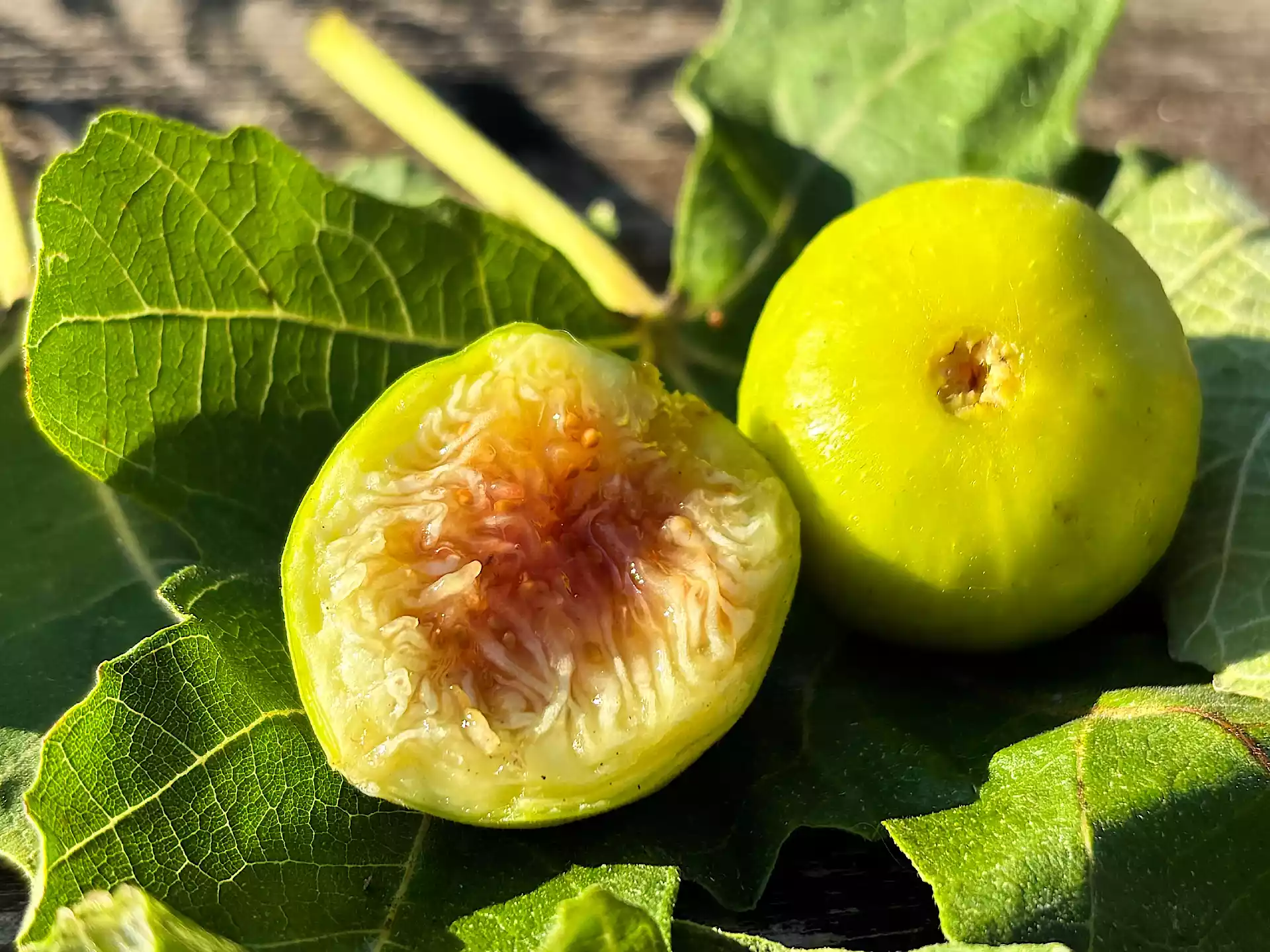
Figs Nutritional Benefits
Nutritionally, figs provide dietary fibre, potassium, calcium and other micronutrients.
Dried figs are very nutrient-dense by weight.
Although they also contain considerably more sugar and calories per 100 grams because most of their water has been removed, they are still a good healthy snack compared to a biscuit or chocolate.
In Greece, and particularly in Corfu, figs remain part of the agricultural and culinary landscape.
From fresh figs eaten straight from the tree to traditional products such as handmade fig pie, sykomaida, a fig preparation especially associated with the Ionian Islands.
Figs in Corfu
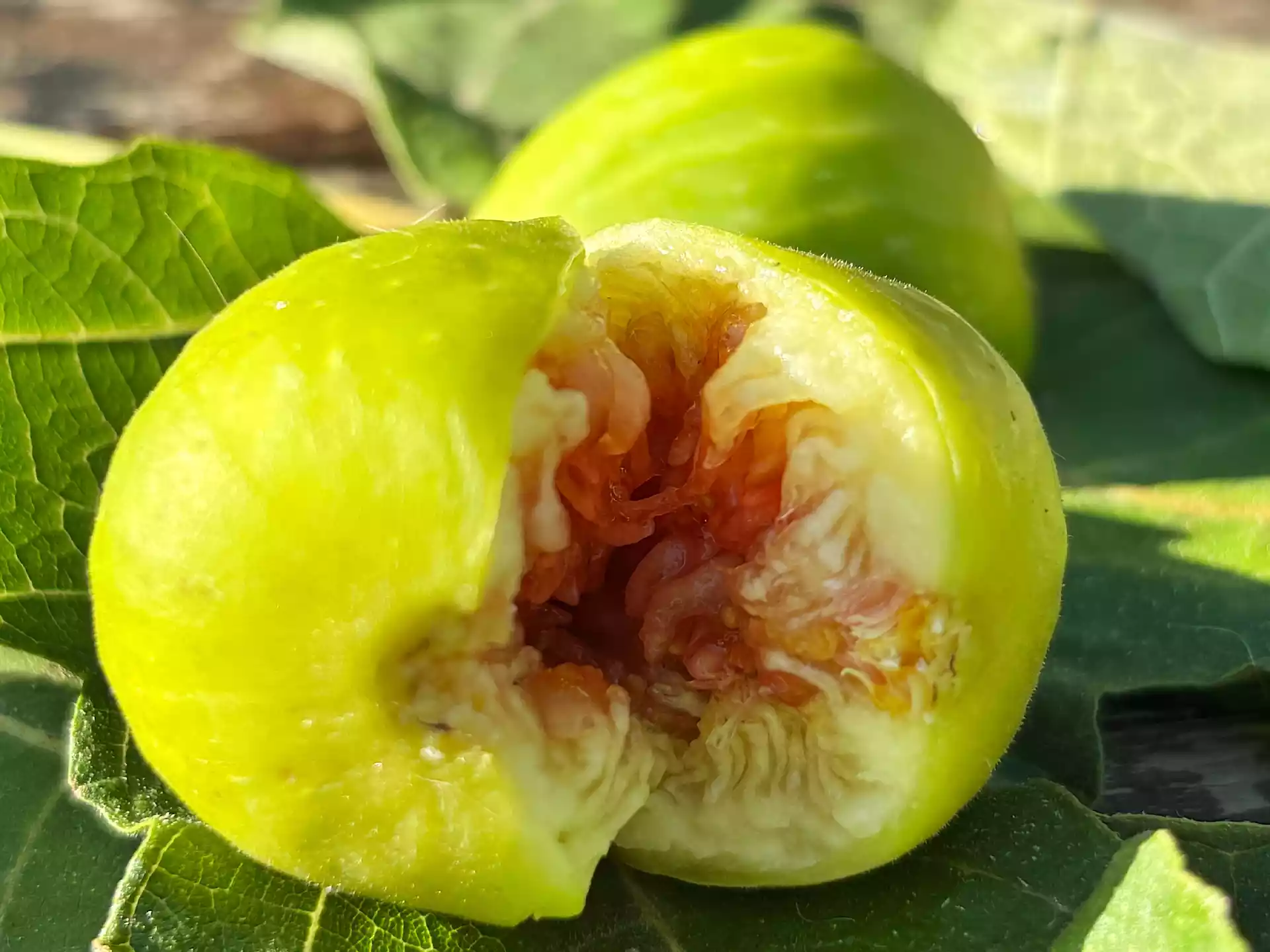
From midsummer until October, you will see ripe figs literally everywhere on the island.
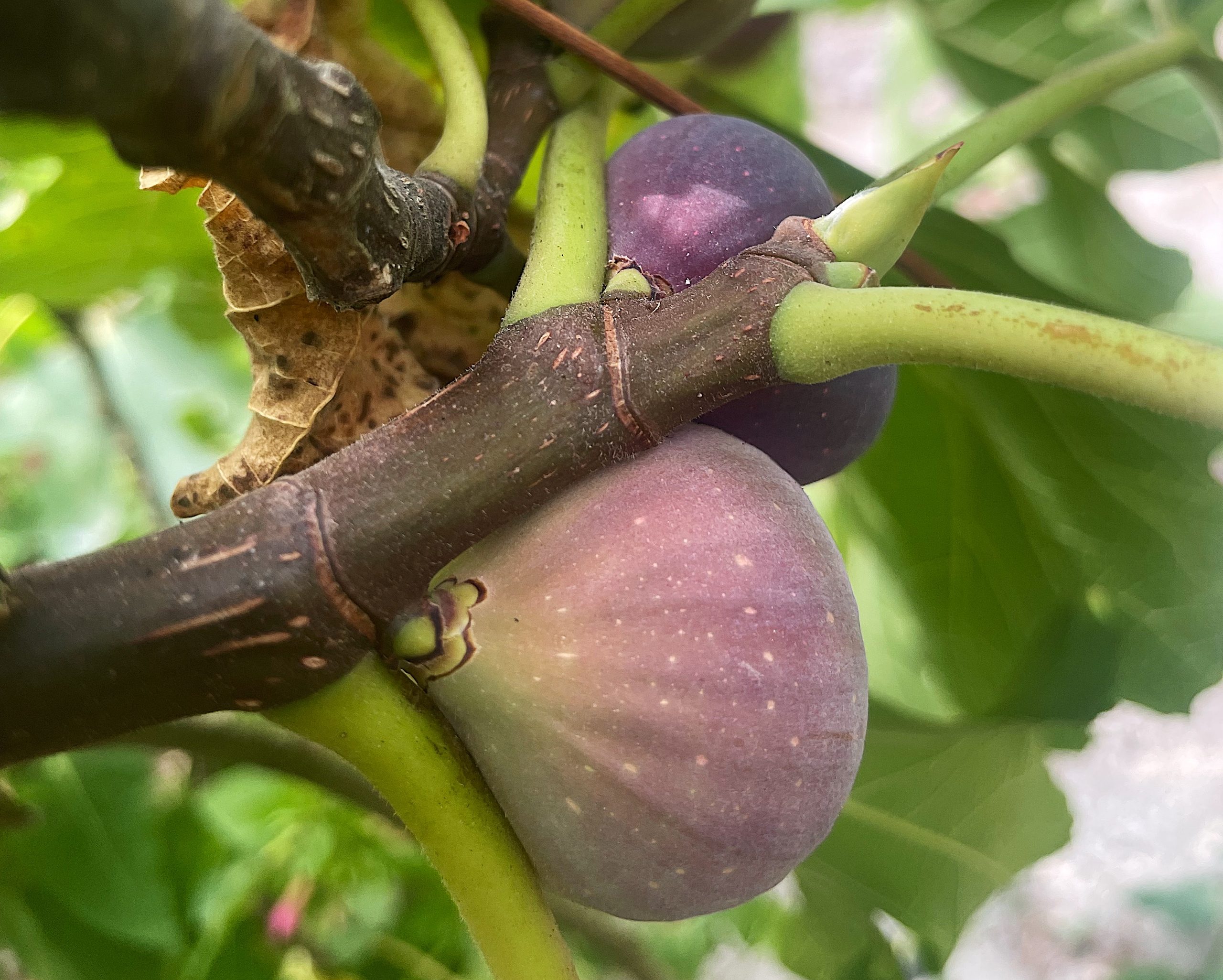
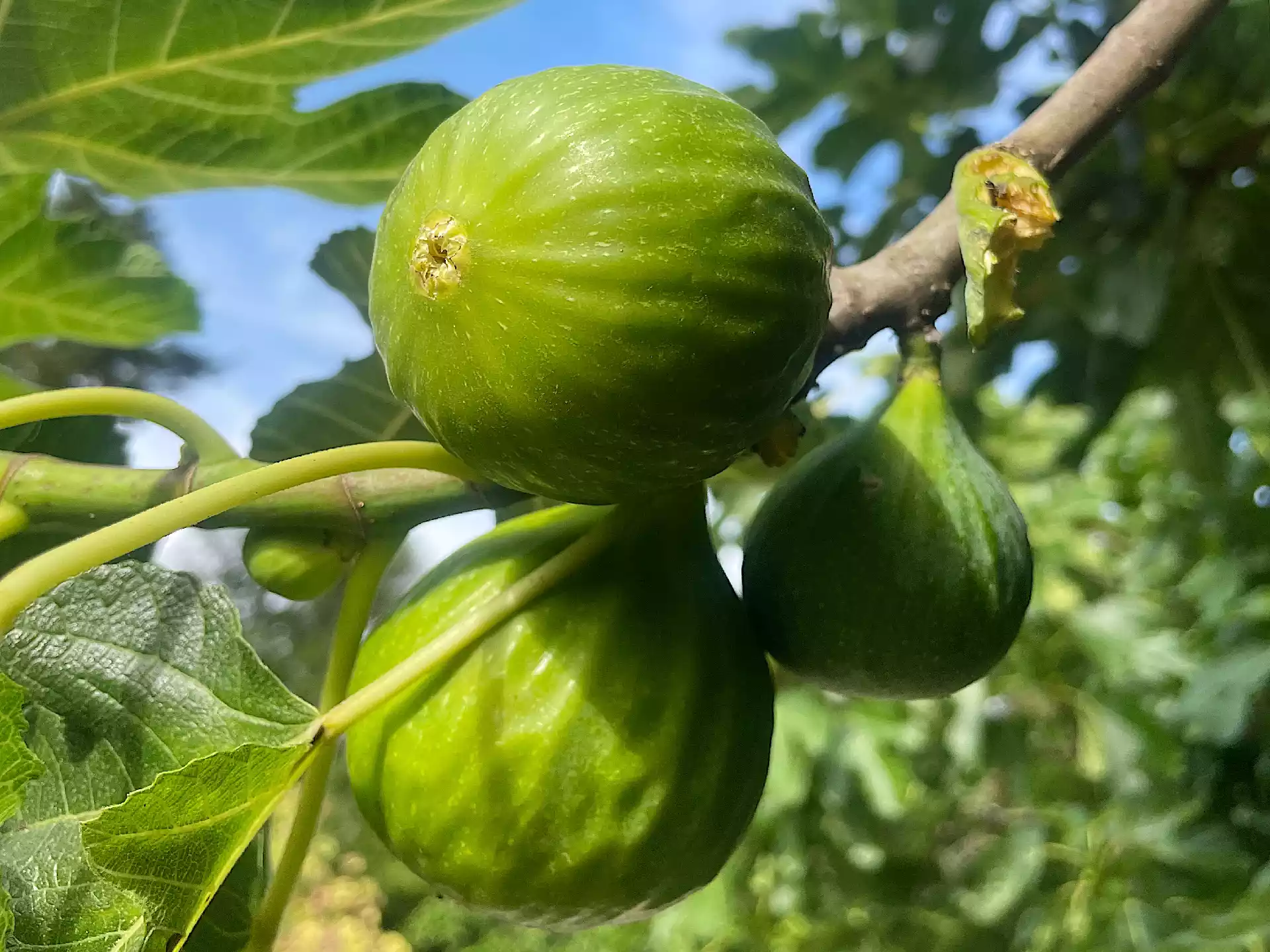
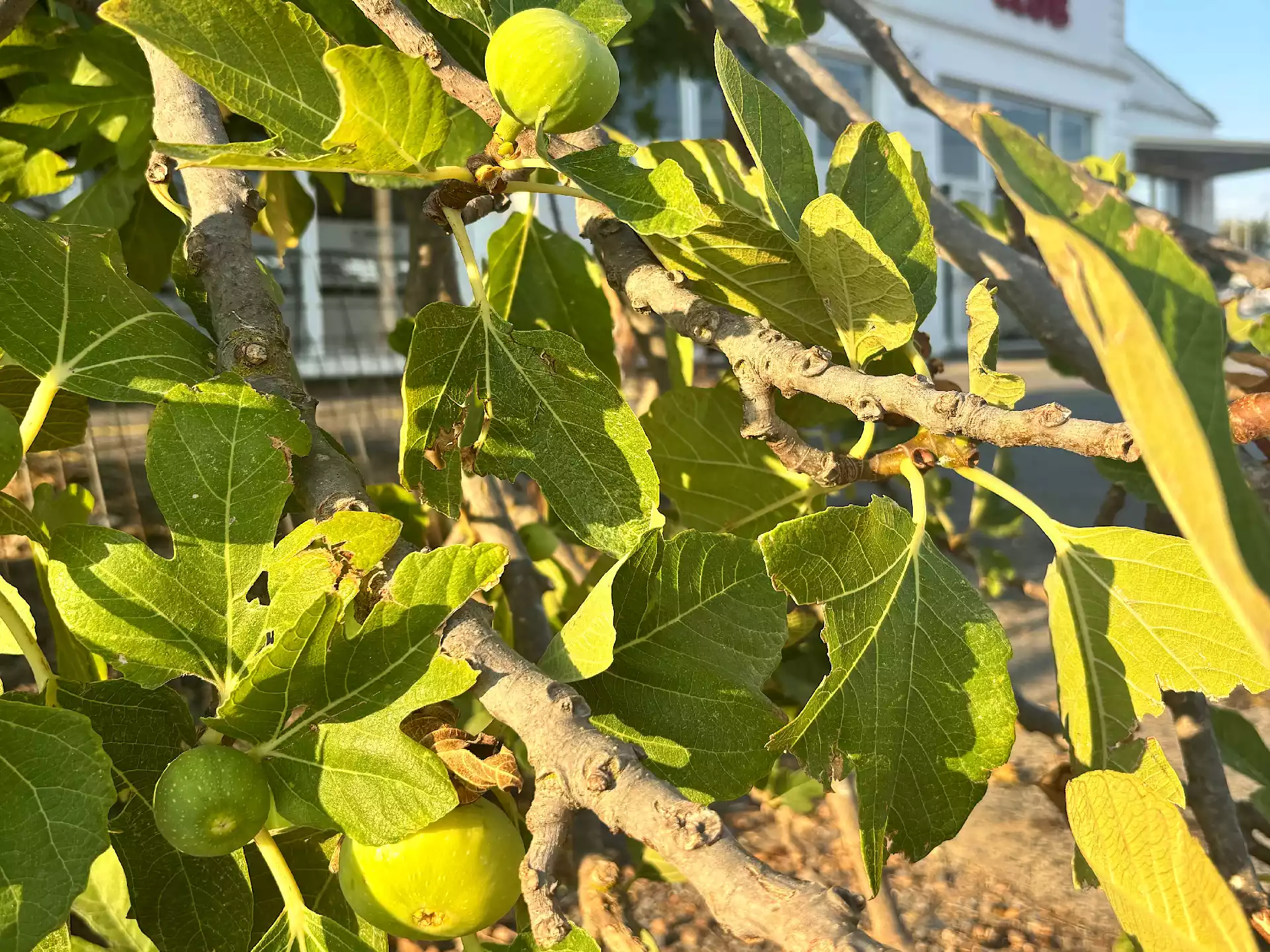
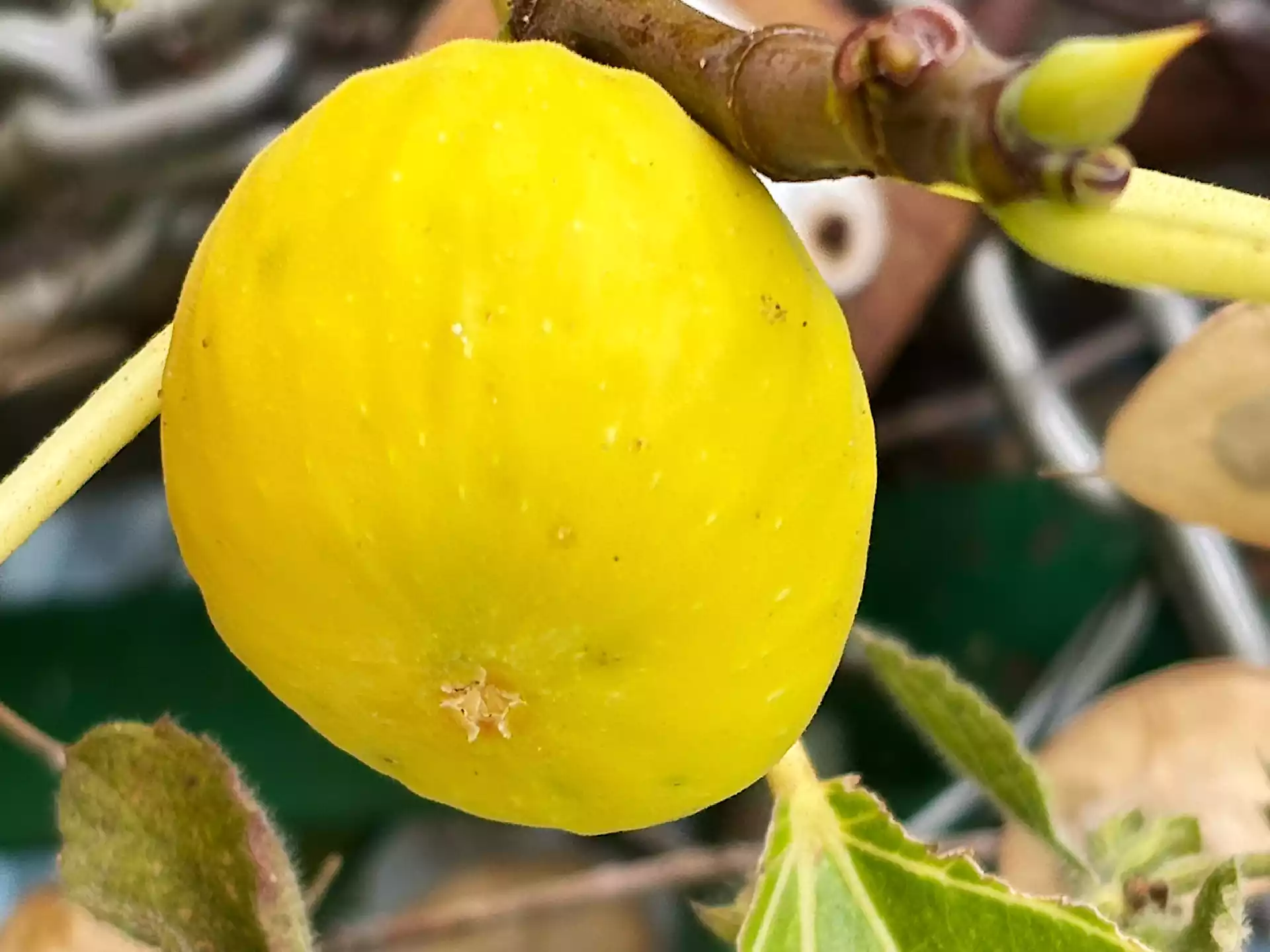
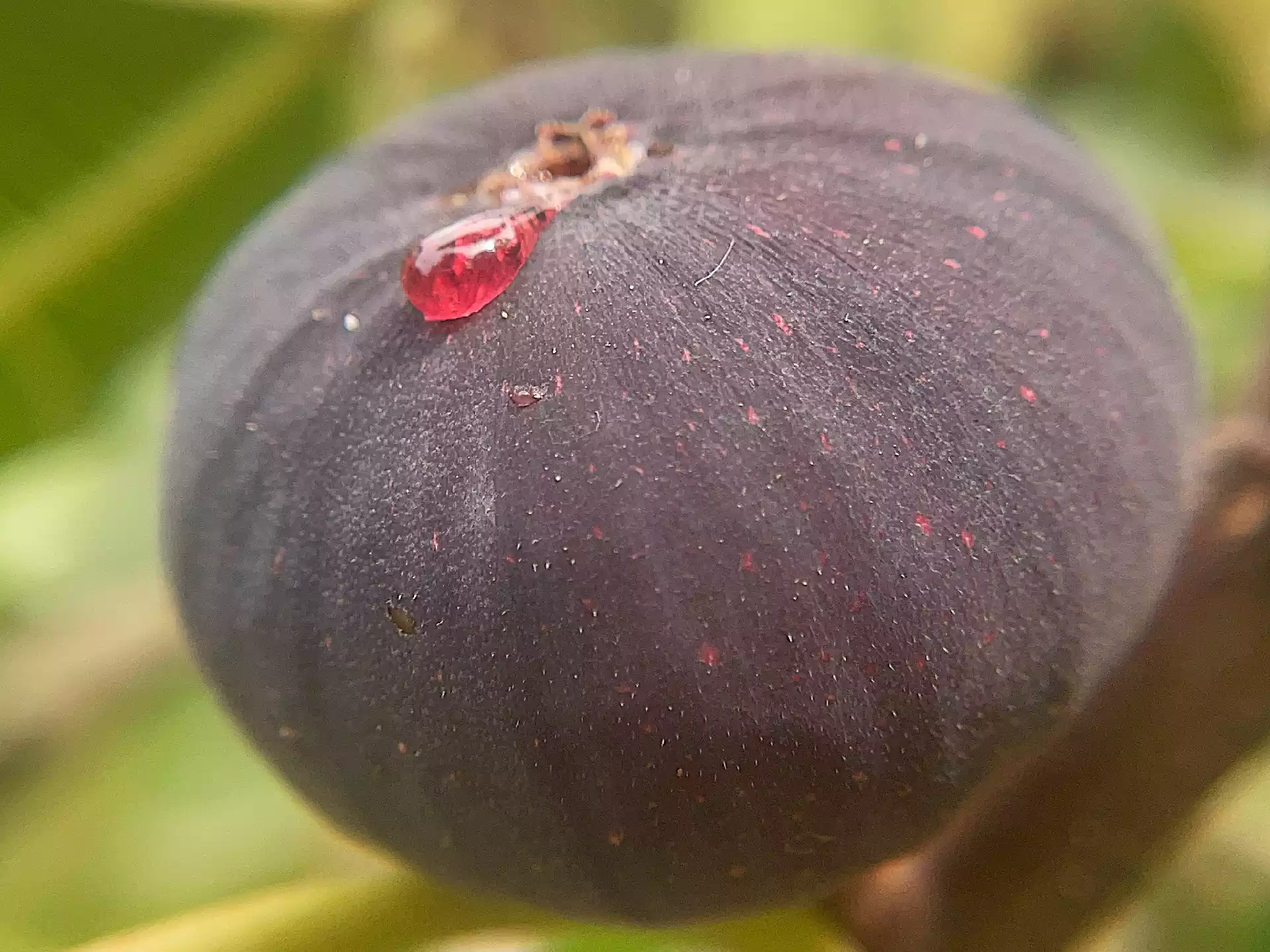
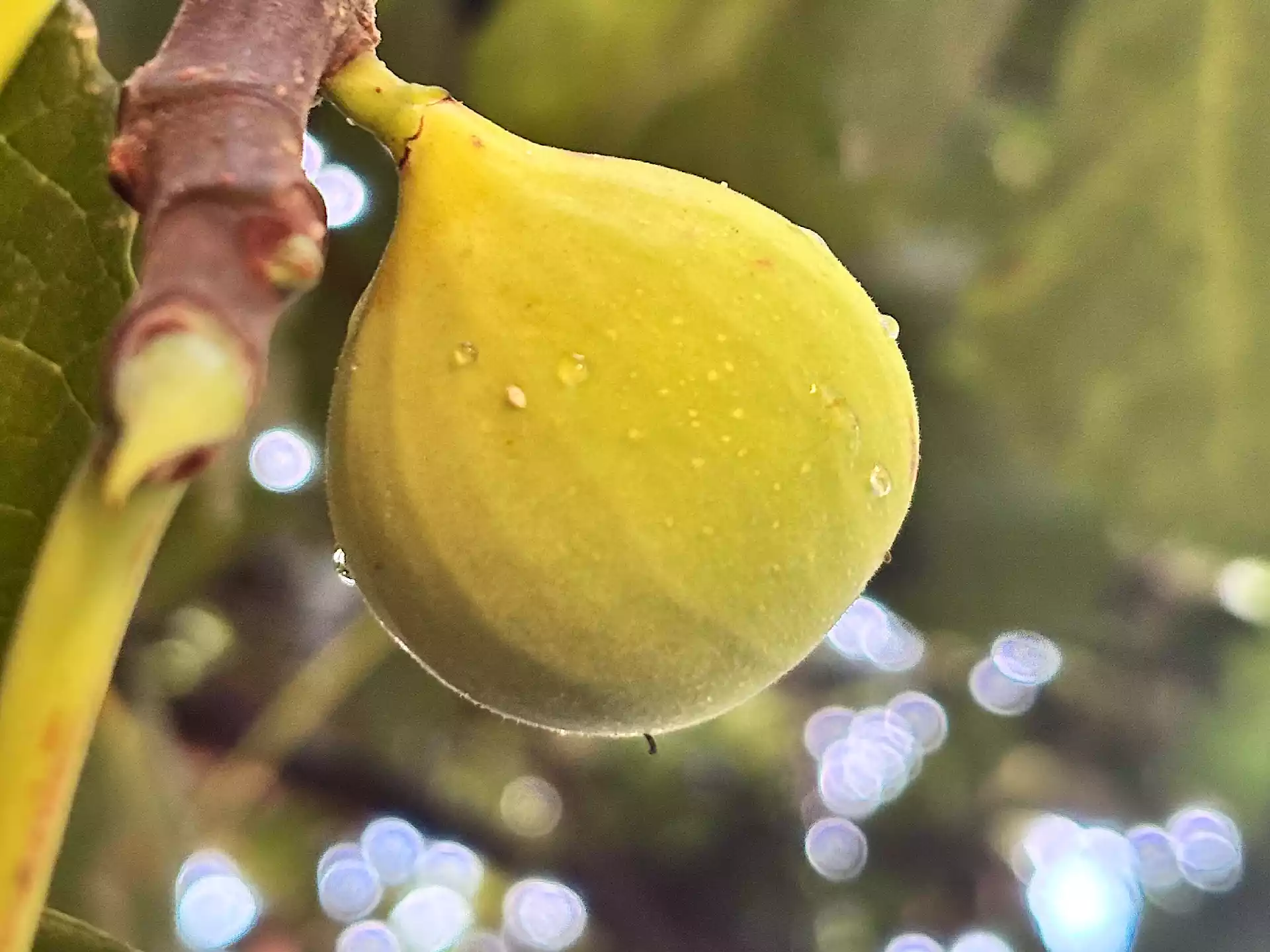
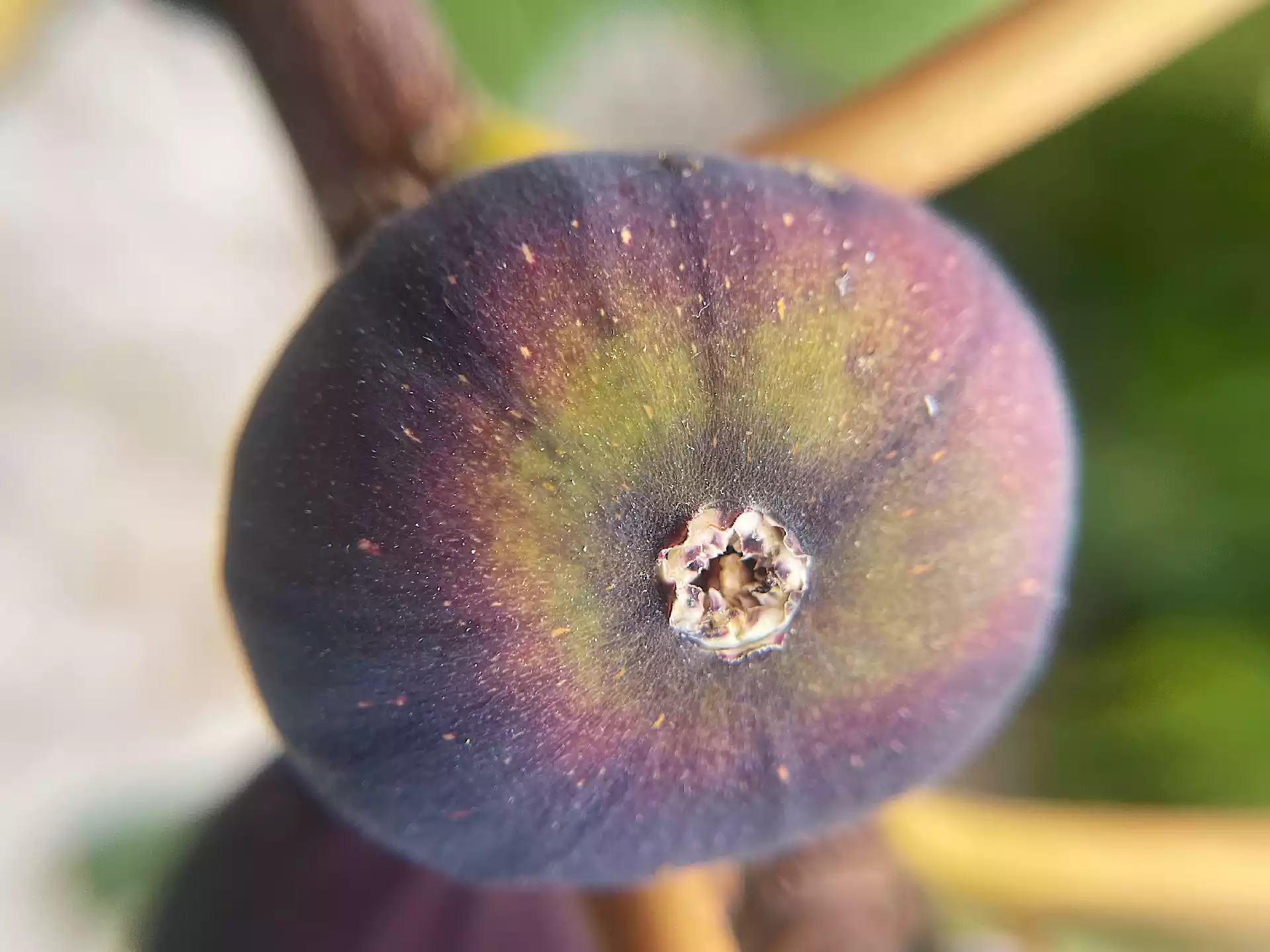
Depending on the variety, you will see figs in Corfu ranging from green and yellow to pink, purple, deep red and almost black.
You do not even have to go shopping at a street market!
You will likely come across a few wild fig trees during a walk to the beach, along country roads, in gardens, among old houses and even in Corfu Town.
Everyone knows that figs are at their best when eaten straight from the tree, perfectly ripe and still warm from the sun.
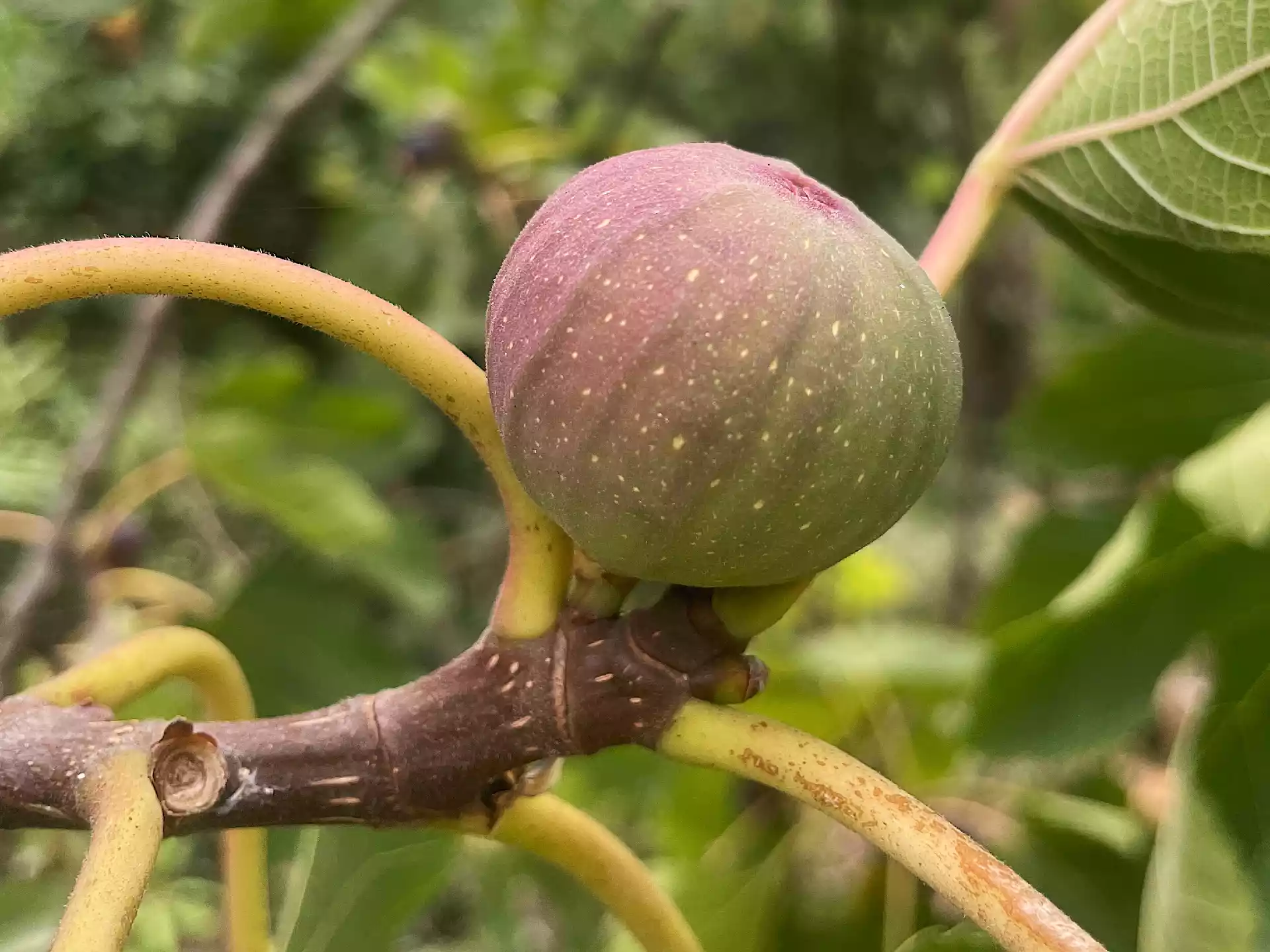
When is a fig ready to pick?
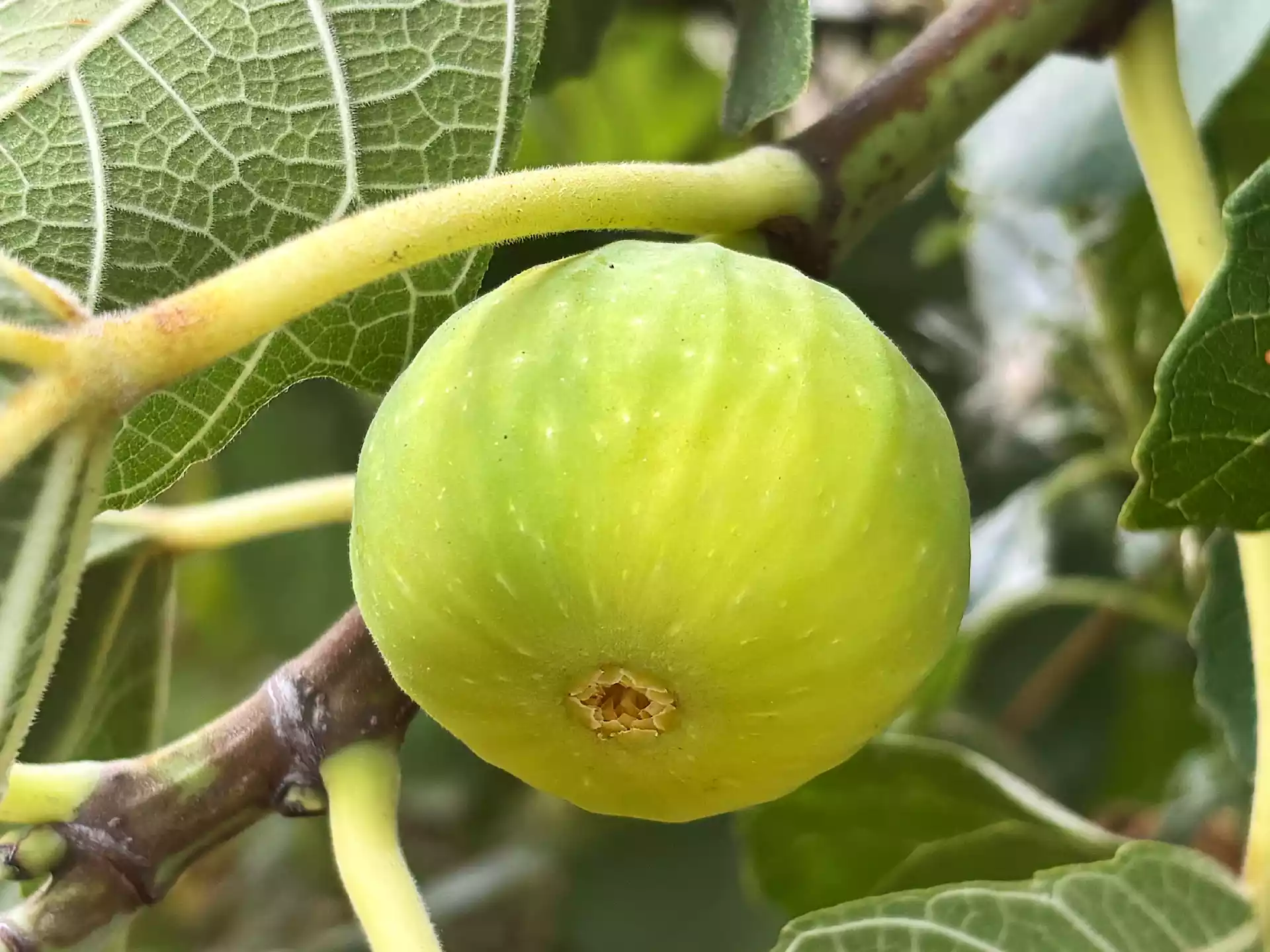
Colour can be misleading because different fig varieties ripen to very different colours.
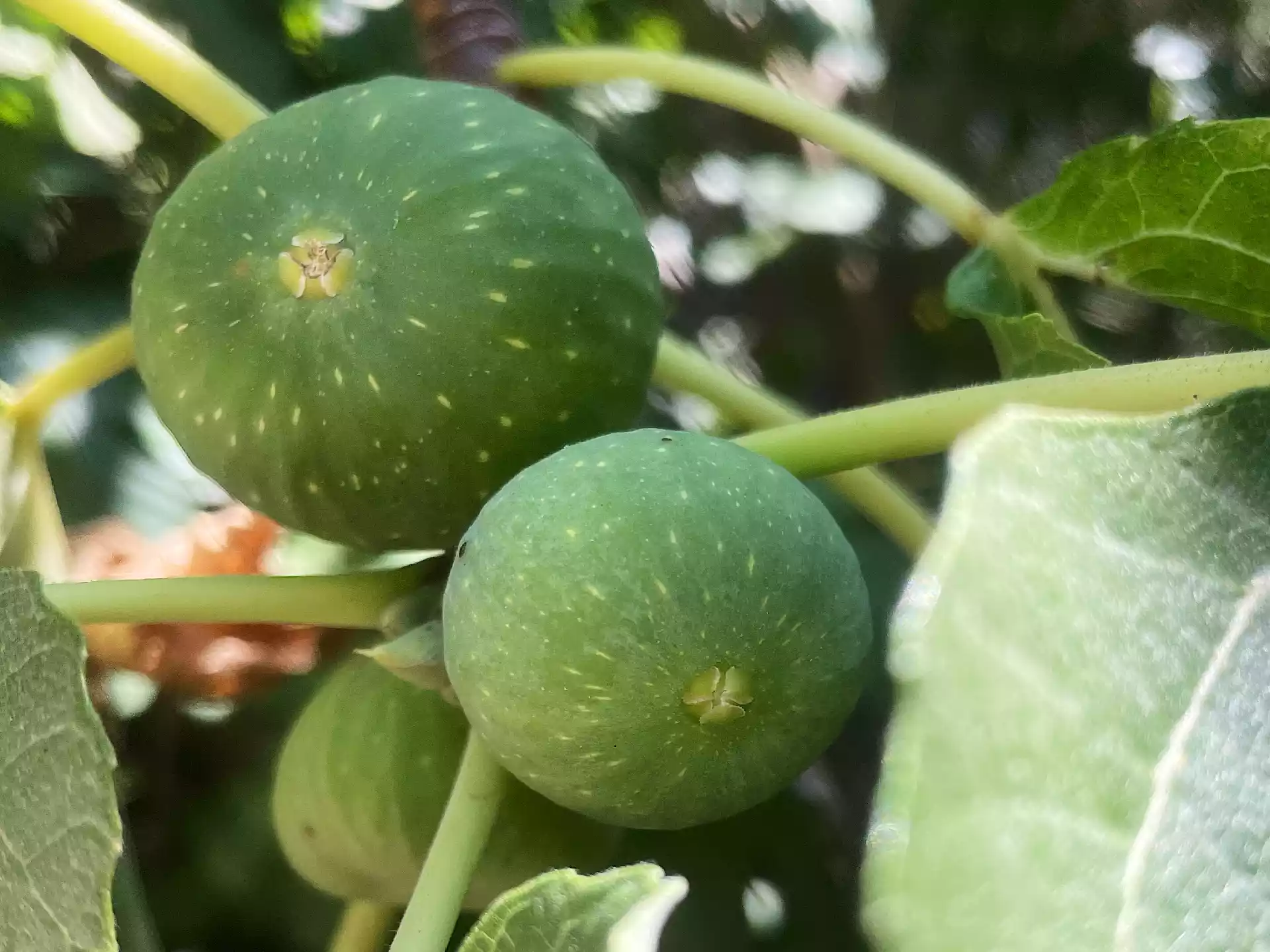
Some remain green even when fully ripe.
Size is also not a reliable indicator, since there are both tiny figs and very large varieties.
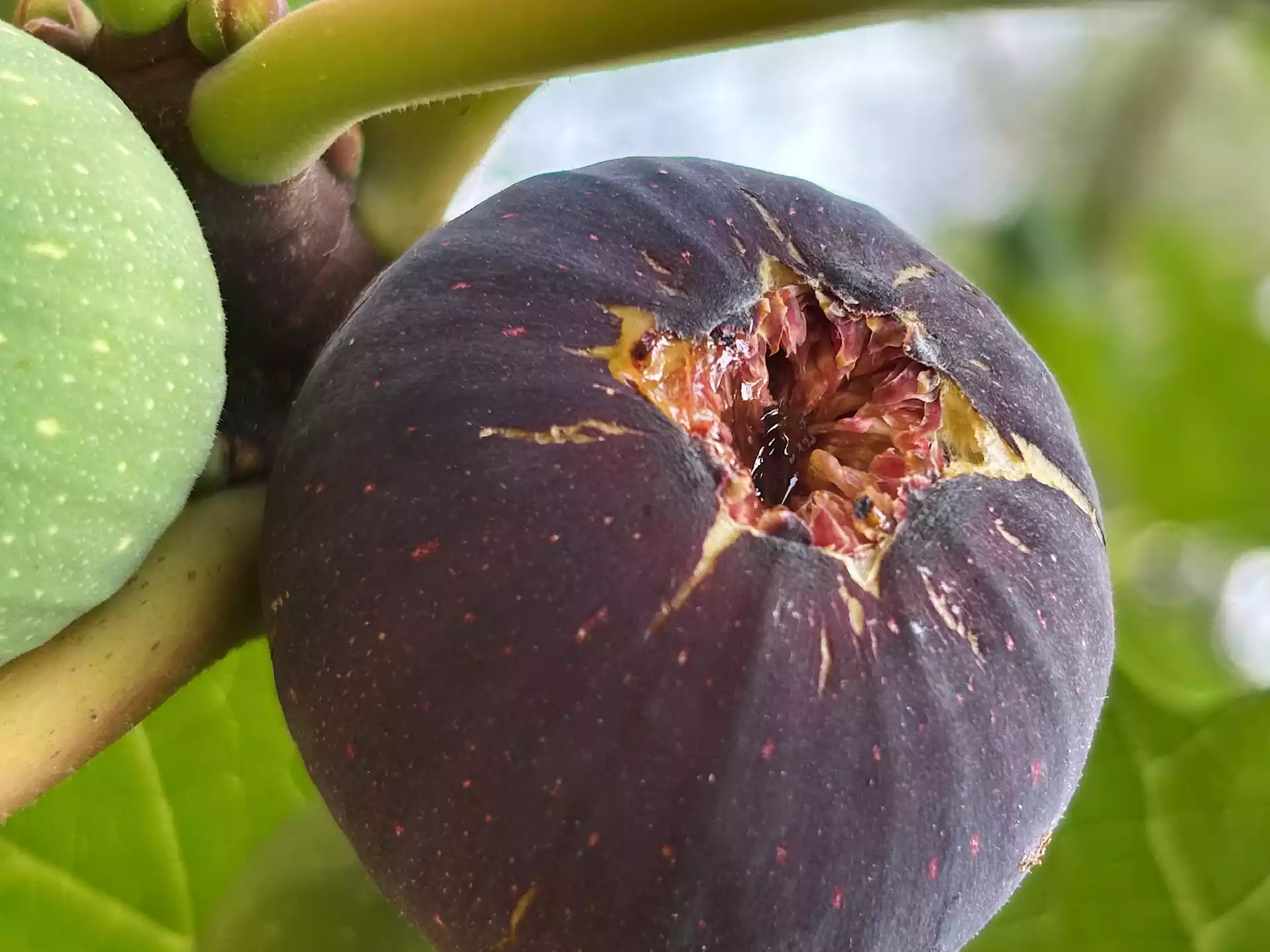
A ripe fig becomes softer and heavier and may begin to hang downward under its own weight.
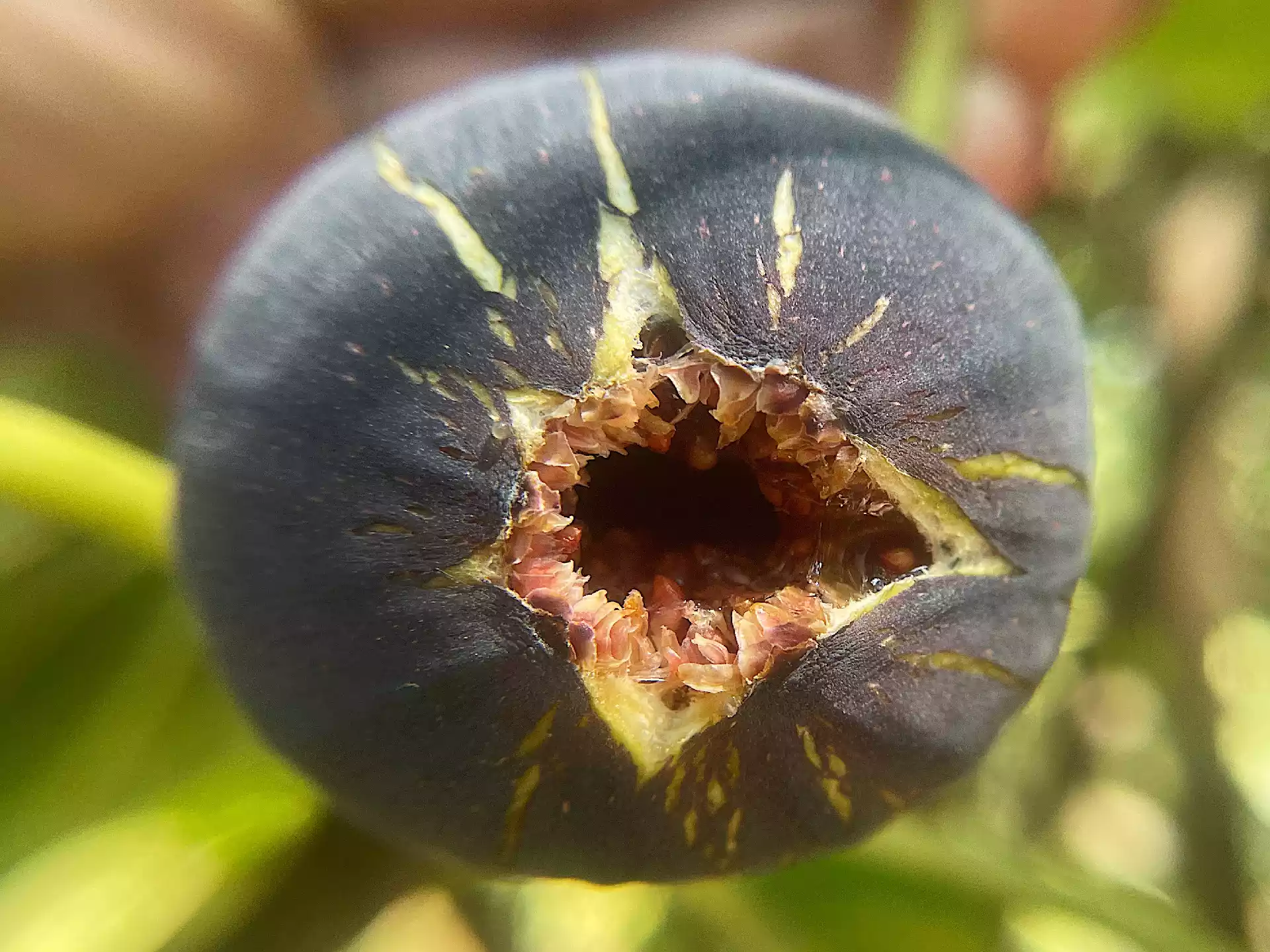
The skin can also become slightly wrinkled or develop small cracks, depending on the variety.
The stem can also give you a clue. But no single external sign is a perfect test of ripeness.
You will have to touch a fig to understand if it is ripe.
Flower that never blooms
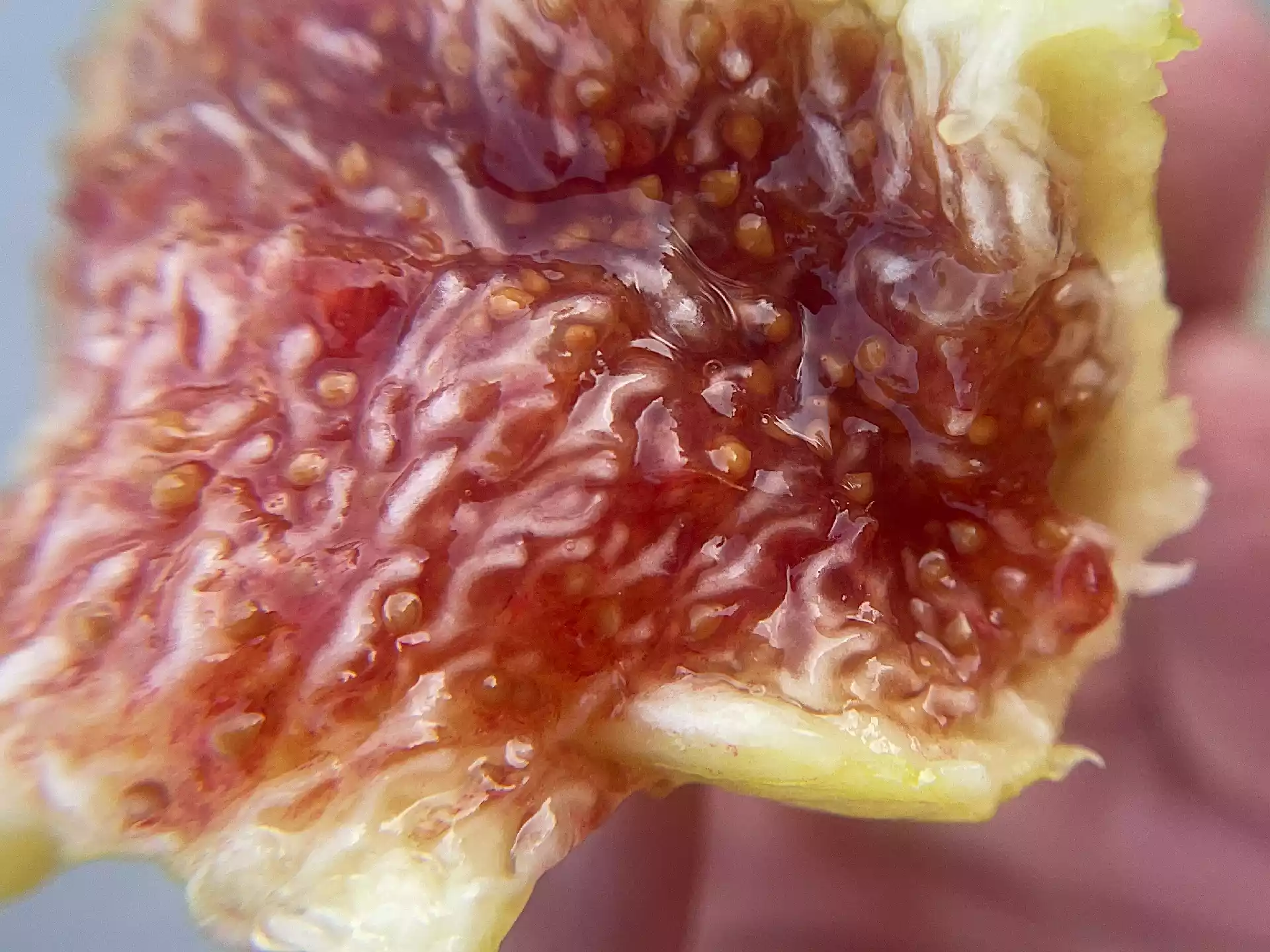
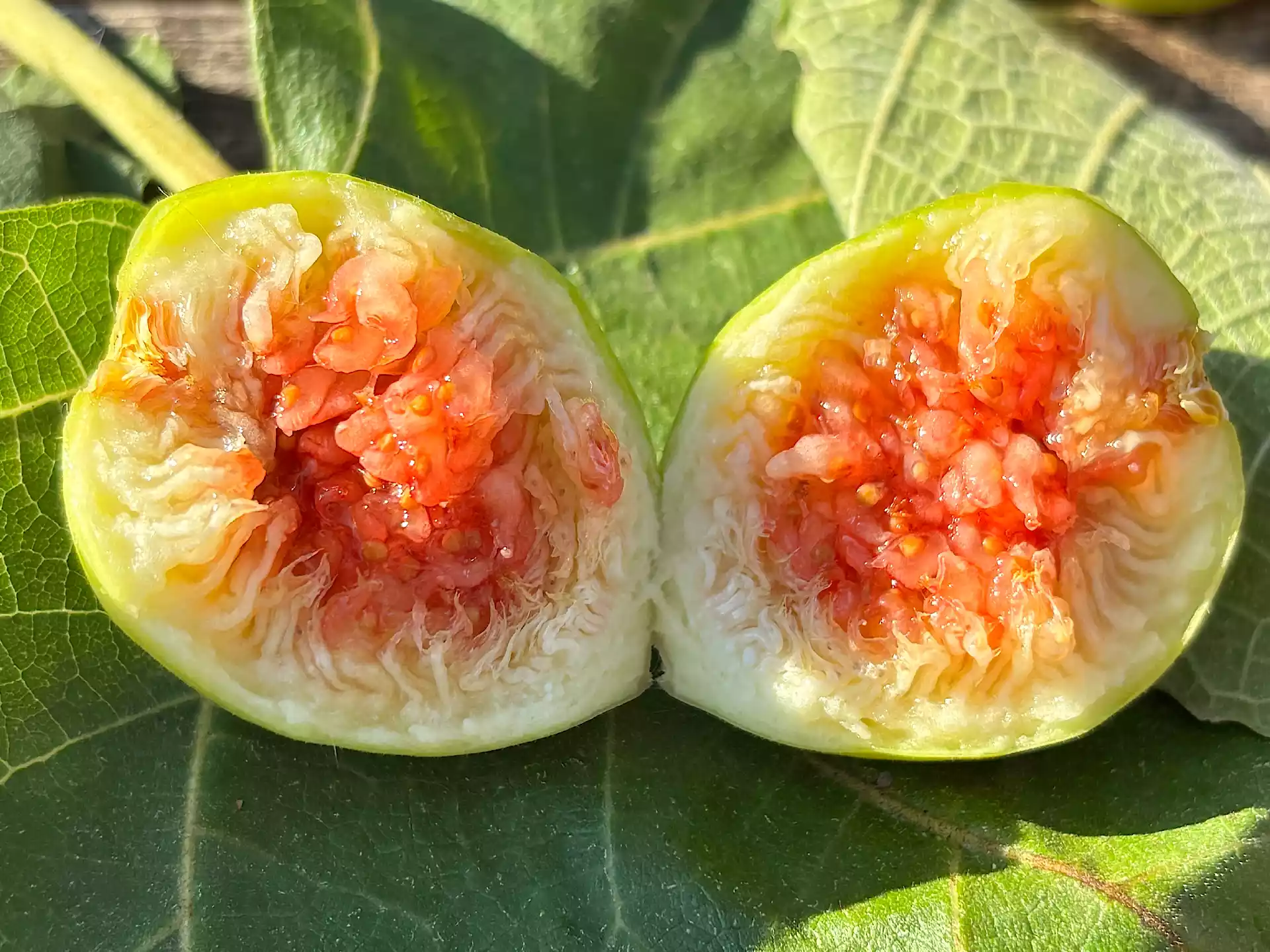
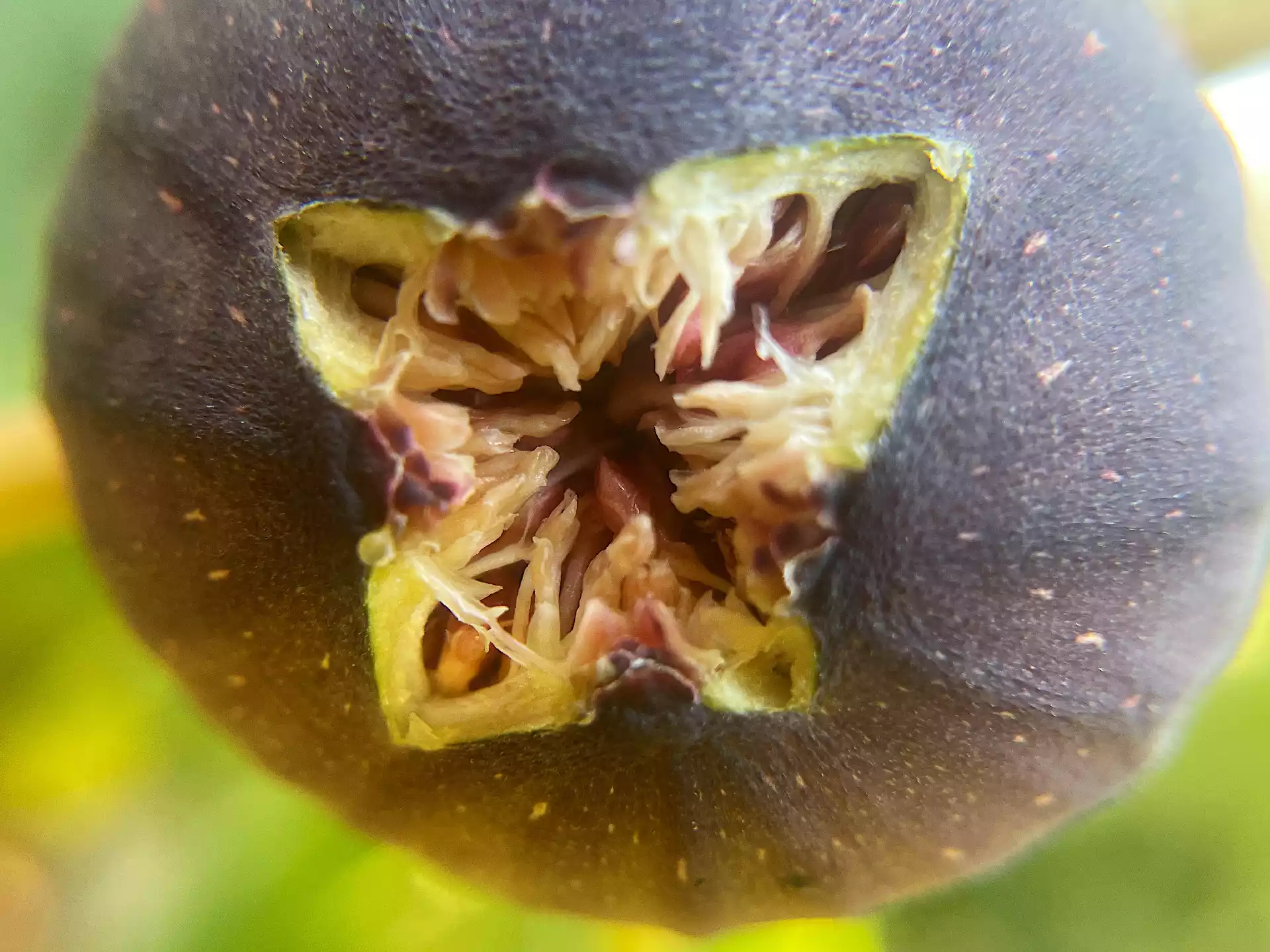
Before eating a fresh fig, cut one open and take a closer look.
You will see hundreds of tiny structures throughout the flesh. These are the structures that give a fig its characteristic crunchy texture.
But there is something even more fascinating than its appearance: those tiny structures are actually the remains of individual flowers that developed inside the fig.
After development, the individual flowers produce tiny one-seeded fruits called achenes.
These are the little crunchy structures you notice when eating a ripe fig.
Dead Wasp Legend
A popular botanical myth says that every edible fig contains a dead wasp.
Indeed, in some types of figs, there is an extraordinary relationship with a tiny insect called the fig wasp.
The female wasp enters through the ostiole of a young fig carrying pollen from the fig in which she was born.
In a pollination-dependent edible fig, she pollinates the flowers but cannot successfully lay her eggs in the long-styled female flowers. She eventually dies inside the fig.
But this is not the case with every edible fig.
Figs Without Pollination
Many edible figs, including common figs, are parthenocarpic, meaning they can fully develop without fertilisation.
Most of the figs you will see in Corfu are likely to belong to different varieties of common-type figs, although the exact varieties can vary.
Smyrna-type figs require pollination to produce their edible crop, but they are just one of the different types among hundreds of fig varieties, which differ in skin colour, size, flavour and nutritional composition.
And the wasp’s main breeding ground is actually the male fig, or caprifig.
The caprifig contains short-styled female flowers in which the wasp can lay its eggs.
Male wasps develop there first, mate with the females and, being wingless, die inside the fig.
The females then leave, carrying pollen to another fig.
So, if you ever hear that every edible fig contains a dead wasp, that is not really true.
And even in pollinated edible figs, the wasp body would not remain recognisable as the fig ripens.
It would break down inside the fig as the fruit develops.
Anyhow, there is no documented case of someone finding recognisable remains of a dead fig wasp inside a ripe fig fruit.
If you enjoyed this story…
We put a lot of time into researching, writing and photographing our stories about Corfu.
Your support helps us keep exploring the island and creating more original content, while allowing us to remain independent and choose the stories we want to tell.
If you enjoy what we do, even a cup of coffee helps keep the heart of Corfu Vibes beating 🧡💙