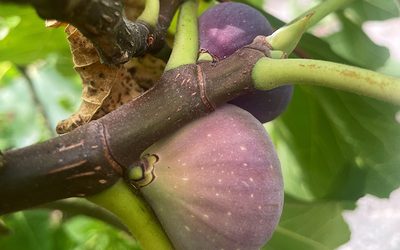
You wouldn’t find a tour guide, description, or ad about Corfu
without a mention of the kumquat – a tiny, oval-shaped orange fruit with a unique scent.
No surprise: Corfu is the only place in Greece (and one of the very few in Europe) where kumquats are cultivated on such a large, commercial scale.
While the soil of the Aegean and other Ionian islands is often too alkaline or dry, the soil of Corfu is rich, fertile, and holds the high levels of water which is what the kumquat needs to thrive.
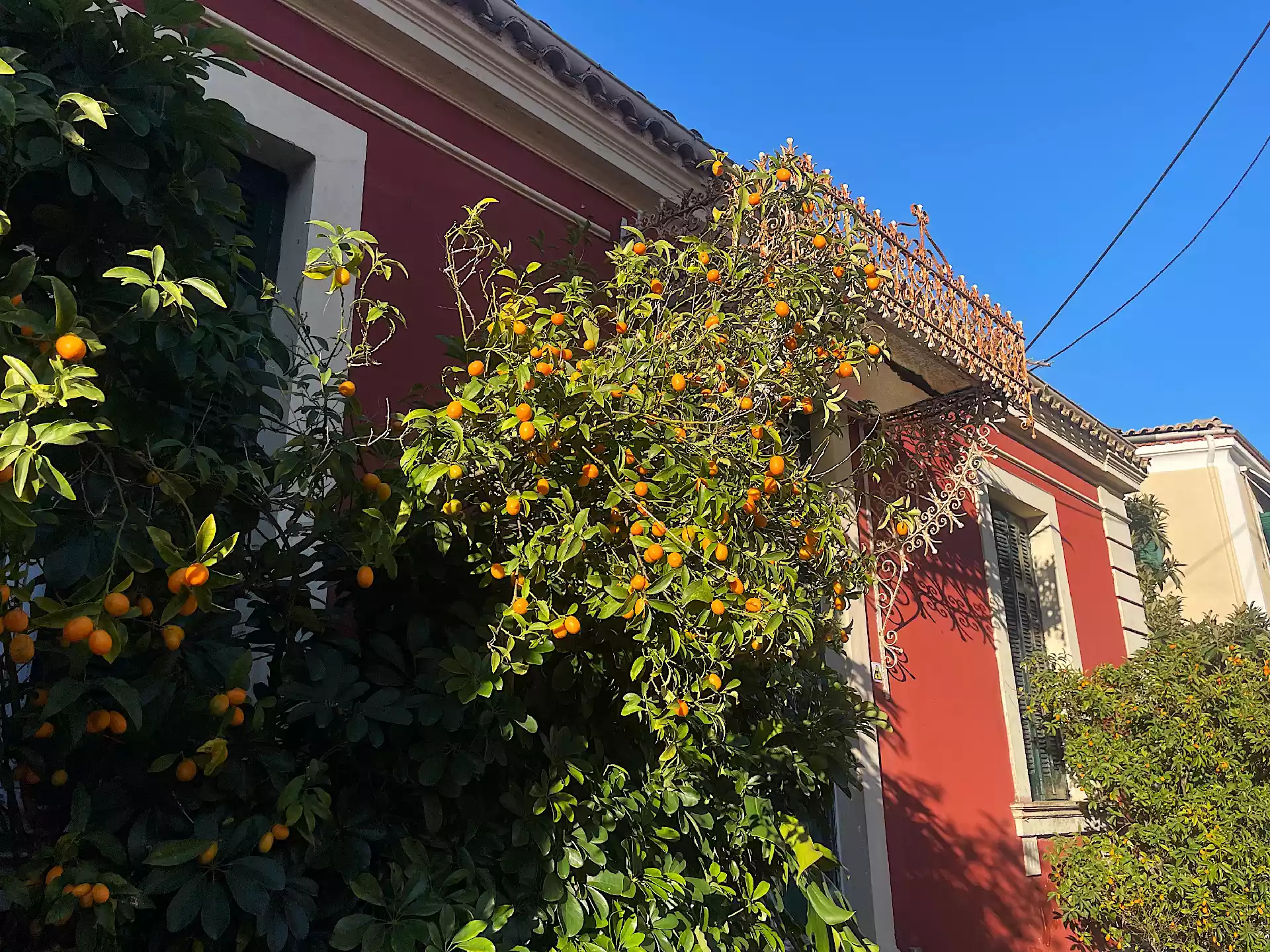
Arrival to Corfu
Kumquats were not always growing abundantly in Kerkyra. Even Golden “Gam Gwat” (the original Cantonese name) fruits were known in China for many centuries before, Europe met them only in 1846.
From this very first batch of “exotic” Chinese plants which were brought to London, British Consul Charles Louis Merlin brought to the island the first kumquats.
Later, after many years of botanical experiments, his son Sidney Merlin cultivated these first plants and transitioned the fruit from the family private mansion in Dassia to the northern villages like Nymfes in 1924.
That was the beginning of establishing the signature Corfu Kumquat, nowadays protected by the PGI (Protected Geographical Indication).
Corfu Brand Creation
It took Sidney Merlin decades of botanical experimentation, from just bringing the first kumquat plants to the island to finally cultivating the variety that became the first commercial brand of Corfu, which truly changed the image of the island.
From a few varieties he got from London, he focused on the Nagami variety kumquat—the oval variety with a thicker skin and more intense scent.
During years of experimenting, Merlin figured out that the round varieties were not good for commercial planting. Their thin skins meant they were easily smashed during harvest and transport.
The Nagami choice was a double win: a fruit with a high concentration of essential oils for liqueurs, and a firm, crunchy texture perfect for spoon sweets (γλυκό του κουταλιού) and glacé fruits (candied kumquats).
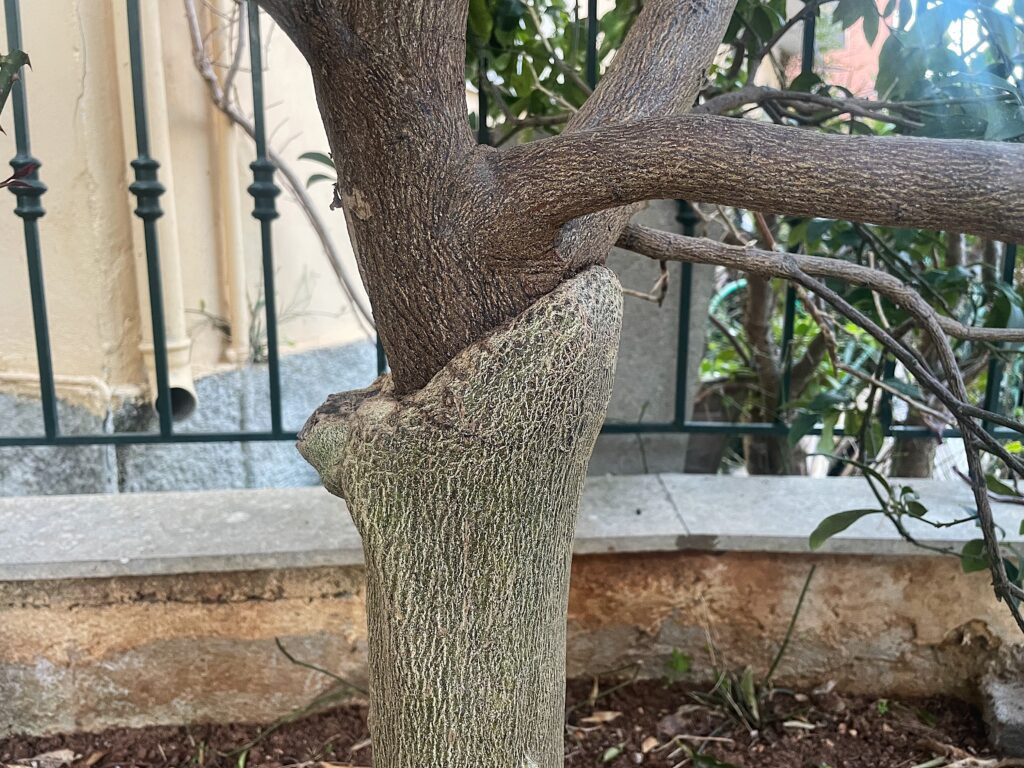
In order to make Corfu kumquat trees stronger and grow faster, he used a rootstock grafting technique.
By grafting the Nagami kumquats onto hardy local roots of Greek bitter oranges, he achieved his goal and planted the first plantations of what is now called “Koum Kouat of Corfu” in Nymfes in 1924.
What’s the fuss about?
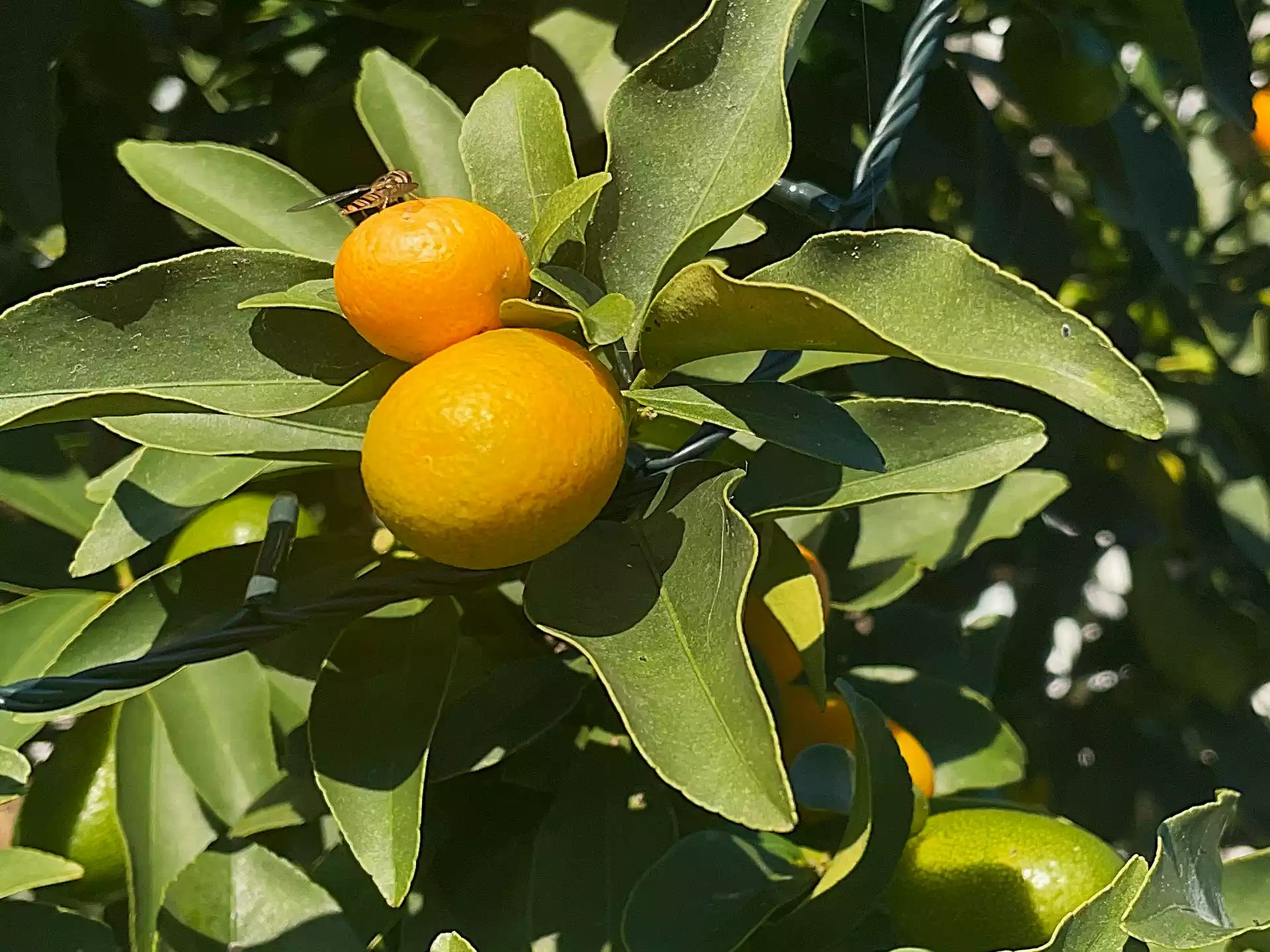
Kumquat is a very small, oval-shaped orange fruit that belongs to the genus Citrus (formerly Fortunella).
Fun fact: kumquats were initially part of the citrus family, but in 1915 botanists decided to classify them as a separate genus, naming them after Robert Fortune, a Scottish botanist who first brought kumquats to Europe.
Later, with the development of modern genetic studies, scientists reconsidered this classification because new research showed that kumquats are closely related to other citrus species.
In 2008, kumquats were returned to the genus Citrus, restoring their original classification as Citrus japonica. Nevertheless, the historical name Fortunella is still often used in botanical literature.
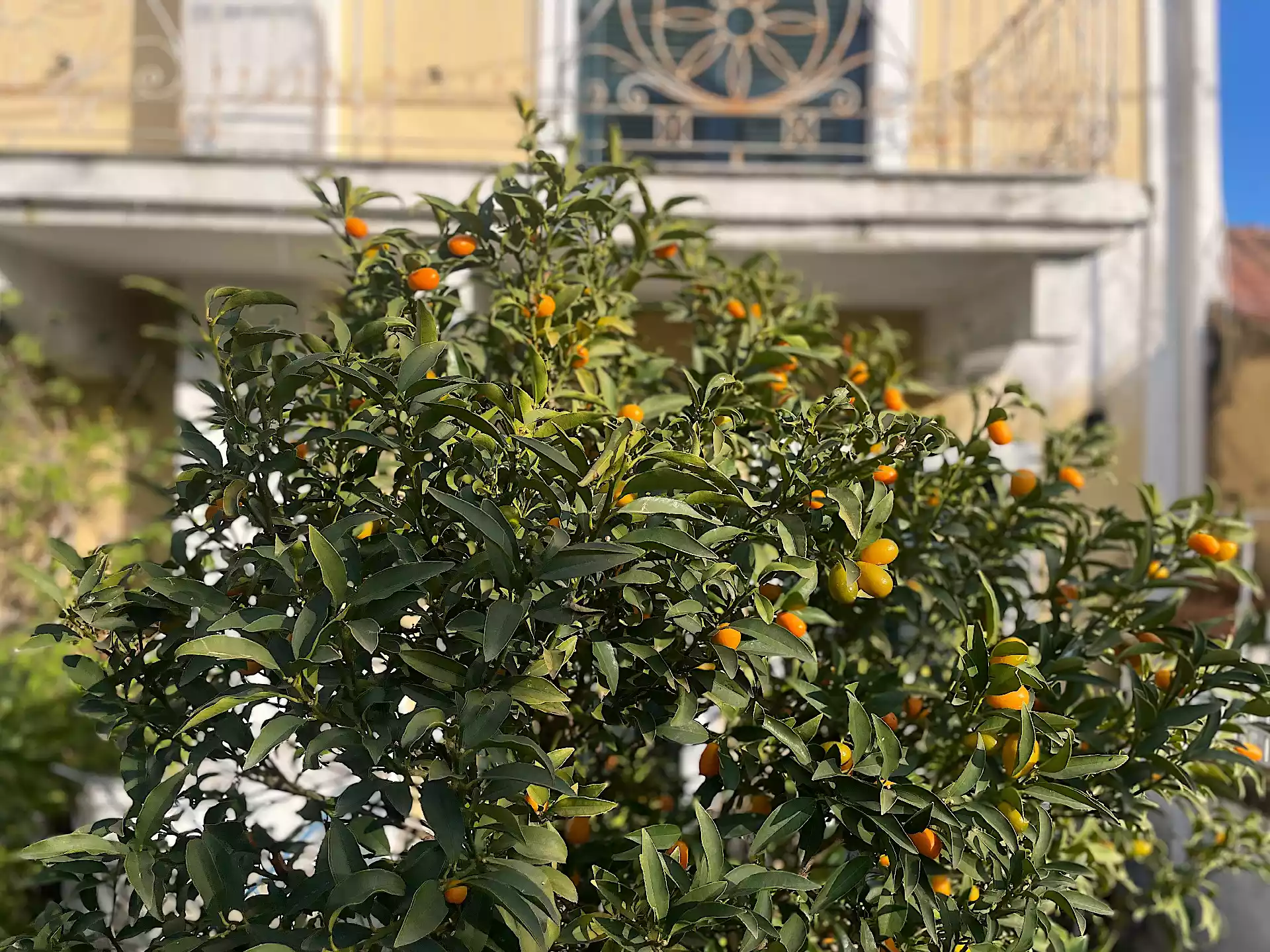
Kumquat is the only citrus fruit in the world that can be eaten whole, together with its skin.
Basically, this is the main essence of the kumquat — its intense, deep aroma, which is contained in its sweet skin. This exact feature is why the kumquat became so popular.
The nutritional profile of the kumquat is pretty impressive. It has a very high vitamin C content and is rich in fiber and antioxidants. Just a few small orange fruits can easily cover more than half of the daily requirement for an adult.
If you travel to Corfu in spring or early summer, don’t miss the chance to try fresh kumquats, which you will surely find at a street market or any greengrocer’s.
If you find them too intense or bitter, fresh kumquats taste great in salads, or you can cut them into thin slices and eat them as a snack.
One harvest, two crops
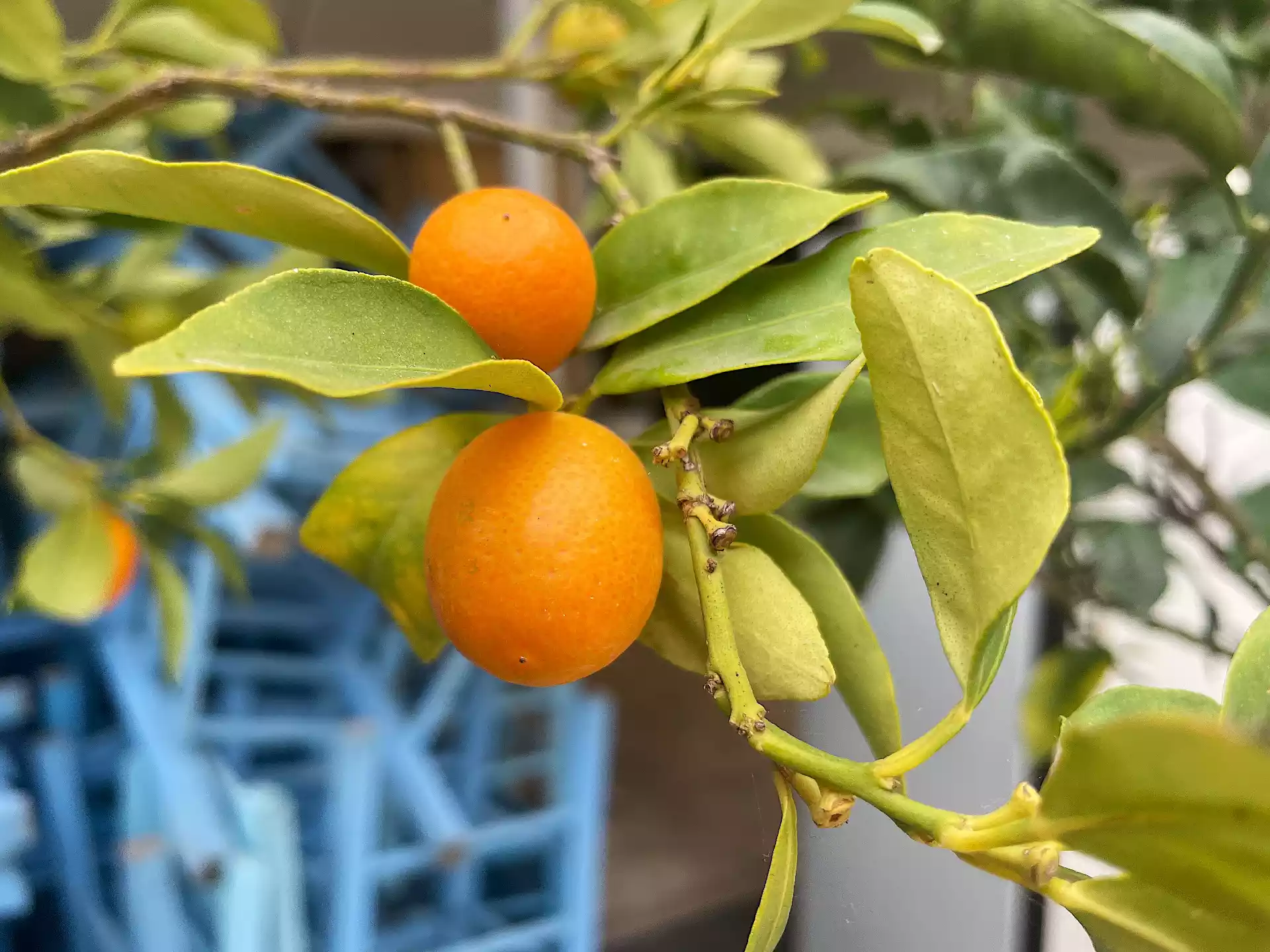
There is quite a popular myth about the kumquat fruiting cycle. Many people think it fruits twice a year. But the truth is that Corfu kumquat has a very long fruiting period, and you can see fruits on the trees from early January up to the end of June.
All the products are made from the same harvest, but the cropping is done in two phases, depending on the type of products they will be used for. That’s why you can still see a lot of kumquats on the trees if you go on a trip to Corfu in early June.
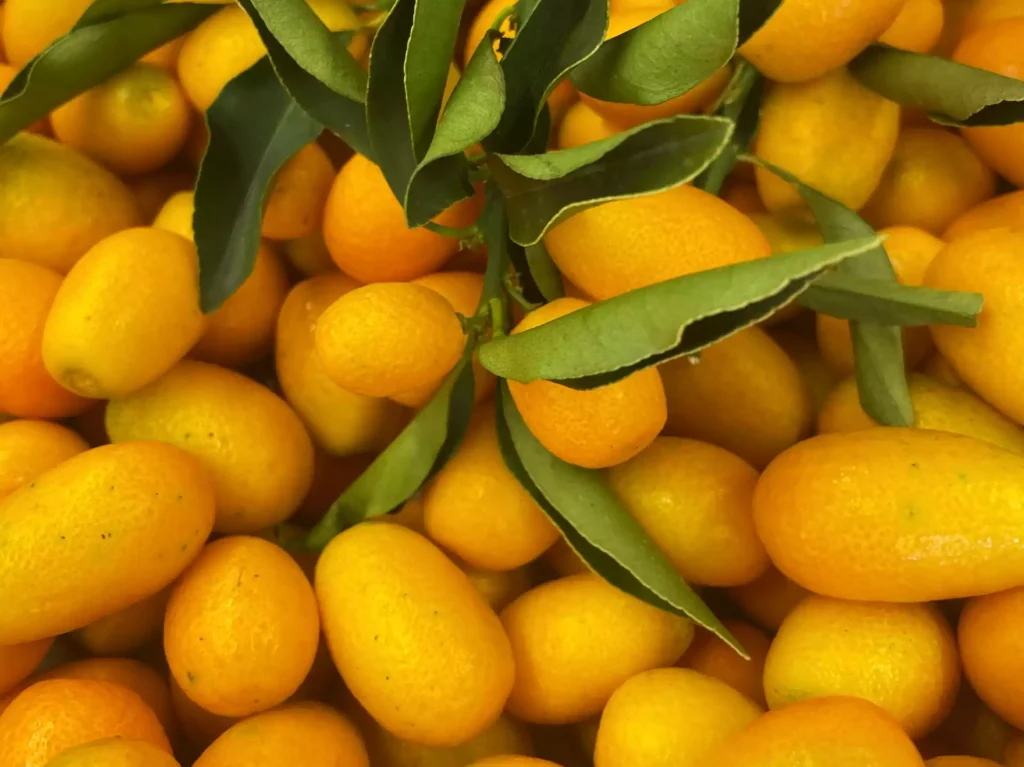
The first, early crop from January to April is what farmers collect for spoon sweets and glacé fruits (candied kumquats).
At this stage, the fruit is firm and holds its shape perfectly during the boiling process.
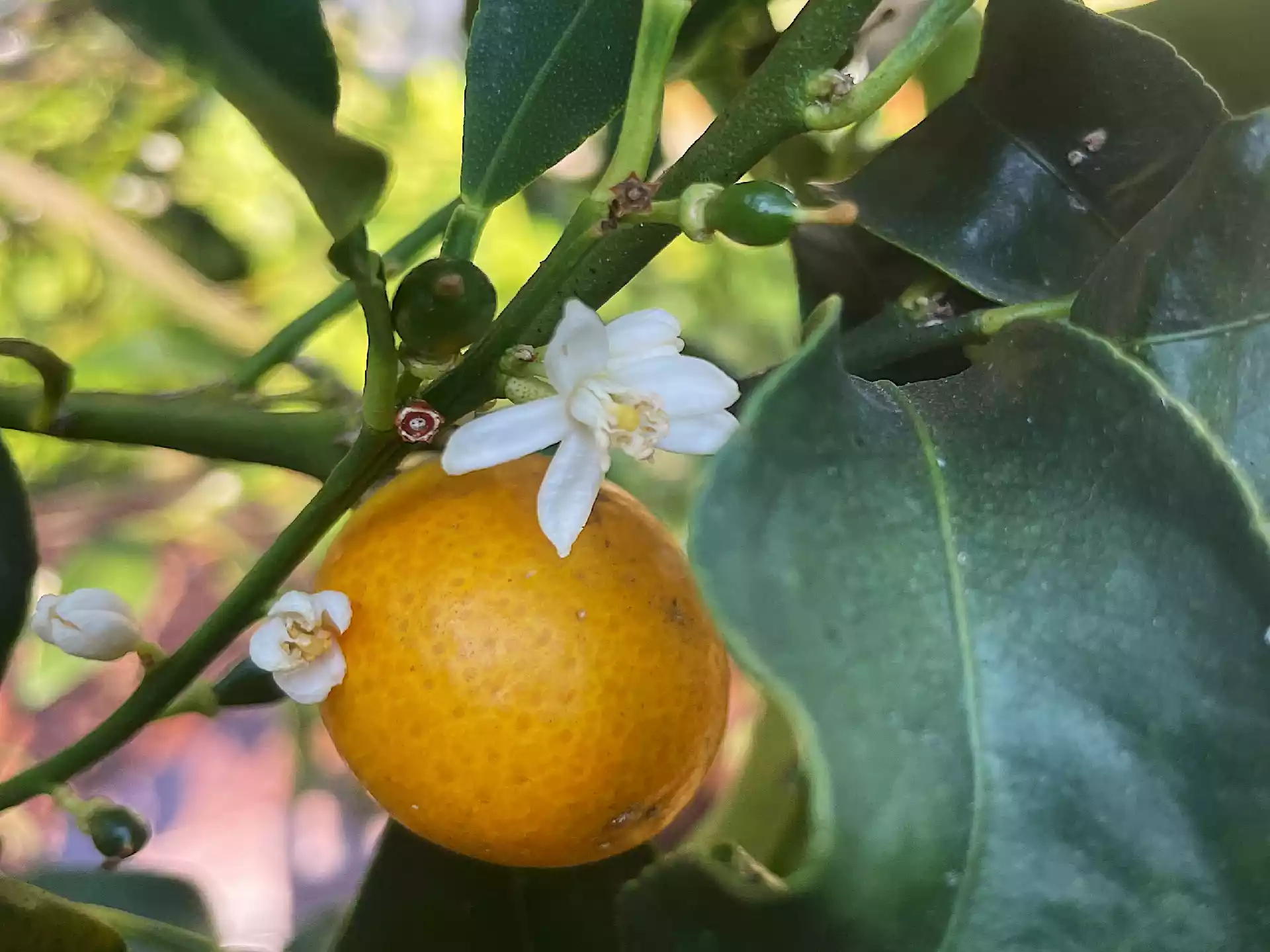
The later crop, from May to June, has a higher concentration of essential oils, which are used to make the famous Corfu kumquat liqueur and aromatic marmalades.
The higher oil content at this stage gives the products their deep, intense flavor and color.
Interesting fact about Greek Oranges
From one of his trips to China the botanist brought to Corfu not only the kumquat, but also juicy Washington navel oranges which in Greece are still called “Merlin” after the man who firstly introduced them to Greek soil in 1924 together with cultivated Corfu kumquats.
Washington navels changed the economy not only of Corfu but of the whole country forever, transforming Greece into a major citrus exporter.
The Merlin variety was juicy, sweet, and almost seedless but with a thicker skin.
So, it was eligible for packing and long-distance transportation, which allowed Greeks to export their citrus fruits to the global market for the first time.
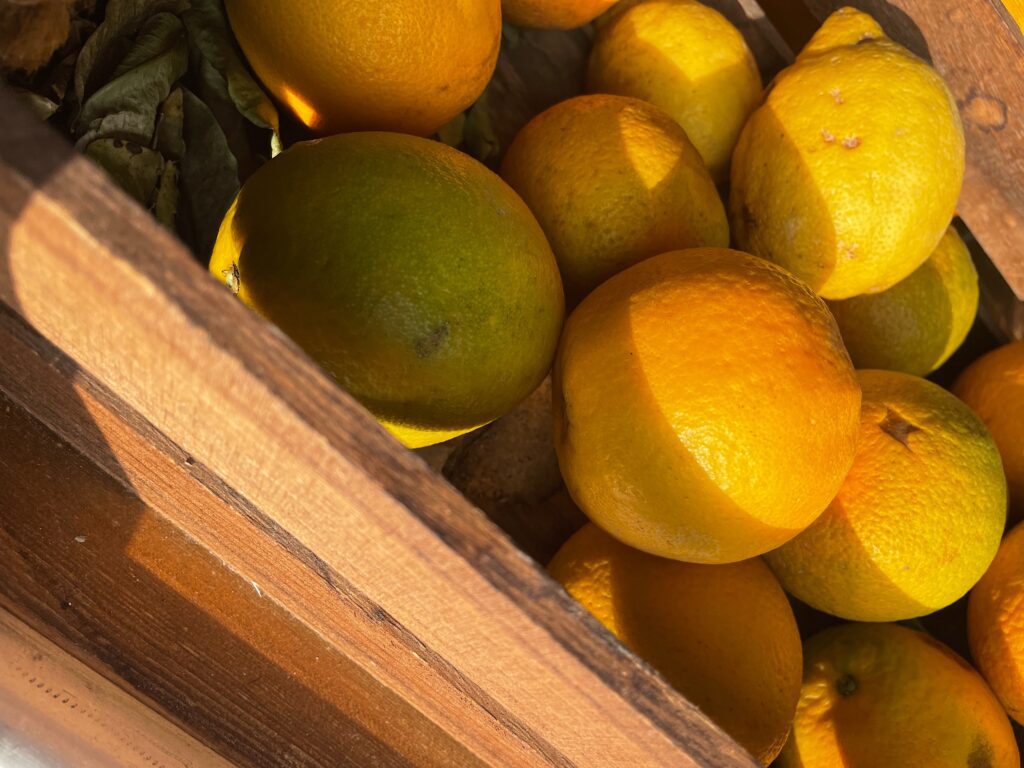
Washington navel oranges originated from a mutation in Brazil in the early 1800s and had already revolutionised the citrus industries in California and Australia for a century before.
However, since Corfu was the first place in Greece to cultivate them in 1924, the name “Merlin” became the national standard.