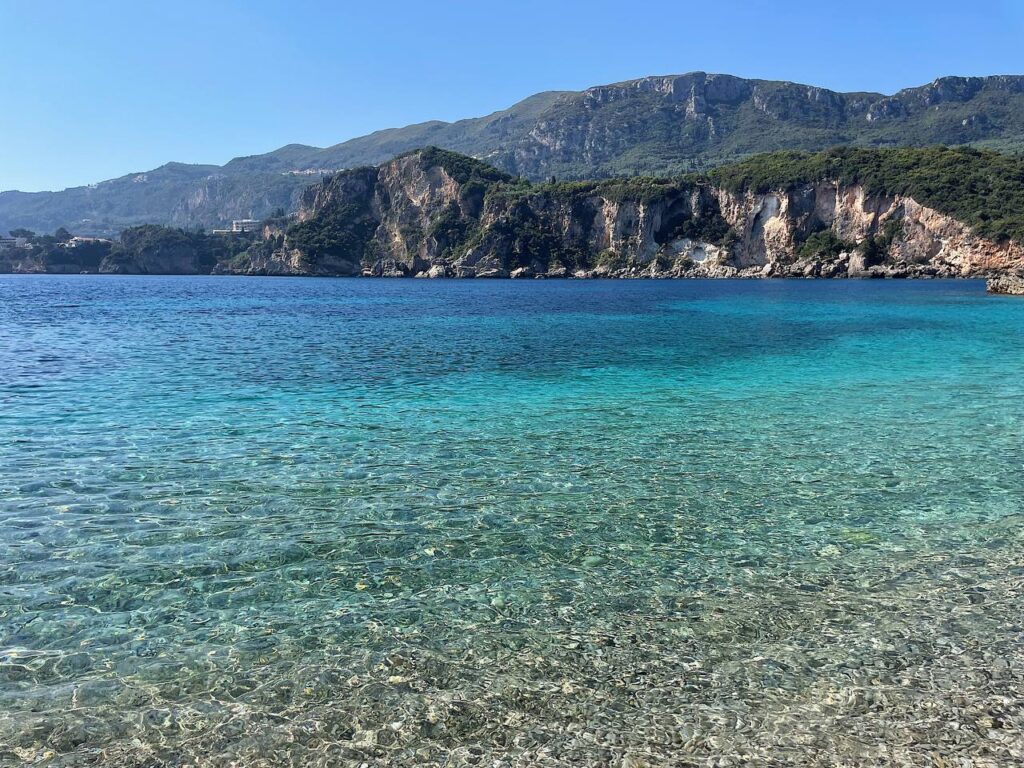
Have you ever wondered what makes the sea in Rovinia beach and other turquoise-water beaches in Corfu look like that?
It’s not some special colour of the seabed, and not even pigments from algae, as you might think.
The whole thing is about the light!
When sunlight enters the water, it is reflected, refracted, scattered, and absorbed.
The longer wavelengths of light, such as red, orange, and yellow, are absorbed first.
Blue and turquoise wavelengths travel deeper and are scattered back to our eyes.
The effect becomes so strong in Rovinia because the water is exceptionally clear, and the white limestone pebbles and seabed reflect the light back through the water completely unhindered and without any additional optical interference.
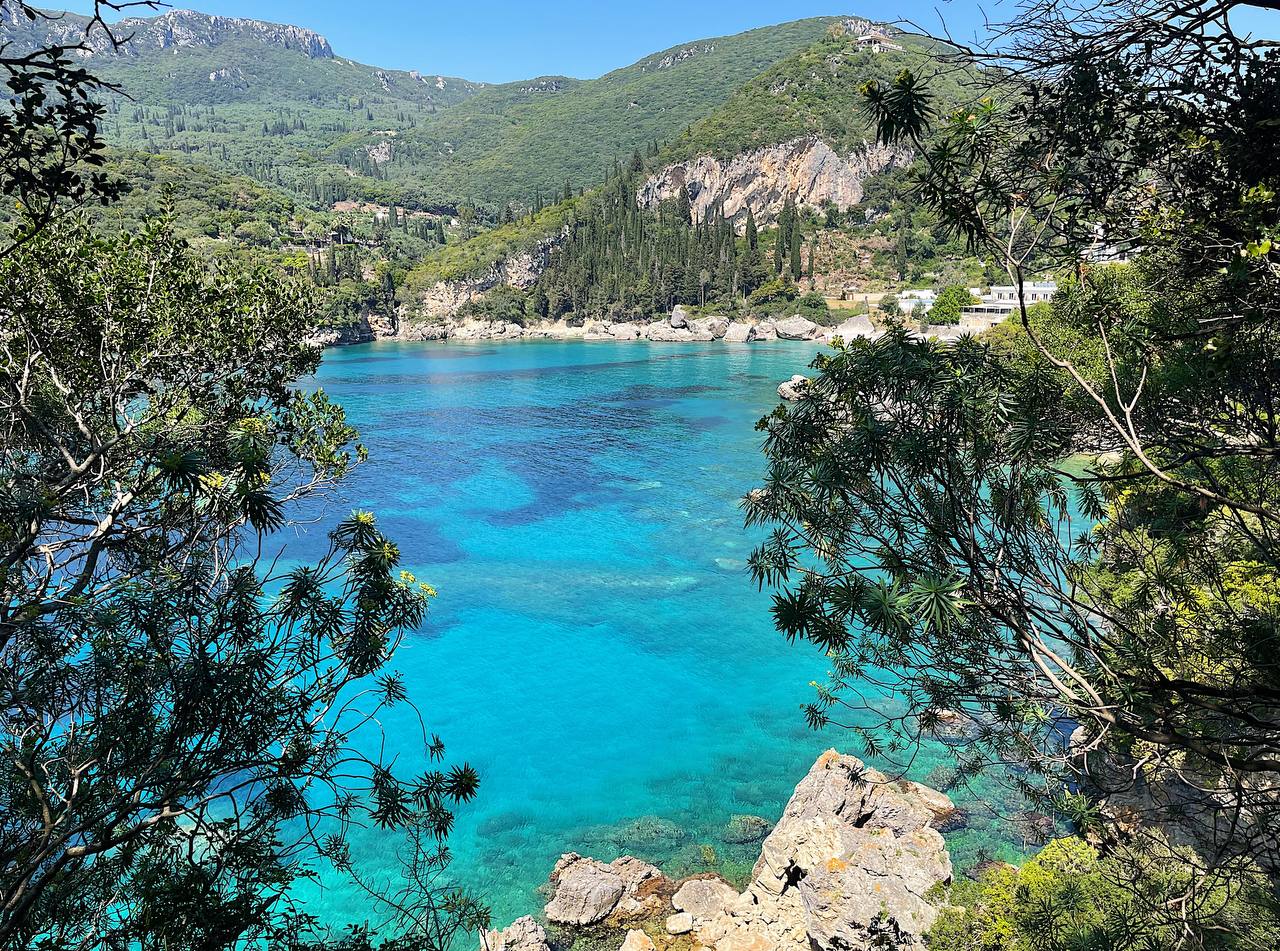
Together, these factors create that stunning turquoise-blue colour that makes Rovinia and many other beaches in Corfu so famous and breathtaking.
Depending on other factors, such as the angle of the sun, water depth, and floating microscopic organisms (phytoplankton), the water may also have green or different shades of light and deep blue.
The more intense the shade, the cleaner and deeper the water.
If the water is completely transparent, it usually means there is a rocky or pebbly bottom.
For example, Canal d’Amour’s waters are extremely turquoise but not transparent.
This means that the seabed there is sandy or made of soft clay, which is easily suspended in the water by the waves.
Other stunning beaches with turquoise water can be found in Palaiokastritsa, Porto Timoni, Paradise Beach and some other beaches.
From the deep, dramatic emerald cliffs of Palaiokastritsa to the twin turquoise bays of Porto Timoni, each spot has its own unique optical magic.
Read our guide to the 5 Corfu beaches most famous for their turquoise-blue water to learn more!
One of the best ways to visit Rovinia beach and other small, secluded cove-type beaches of Corfu, some of which have no access other than by sea, is by boat.
You can either rent a boat and explore at your own pace or book a guided boat tour with one of the many local operators.