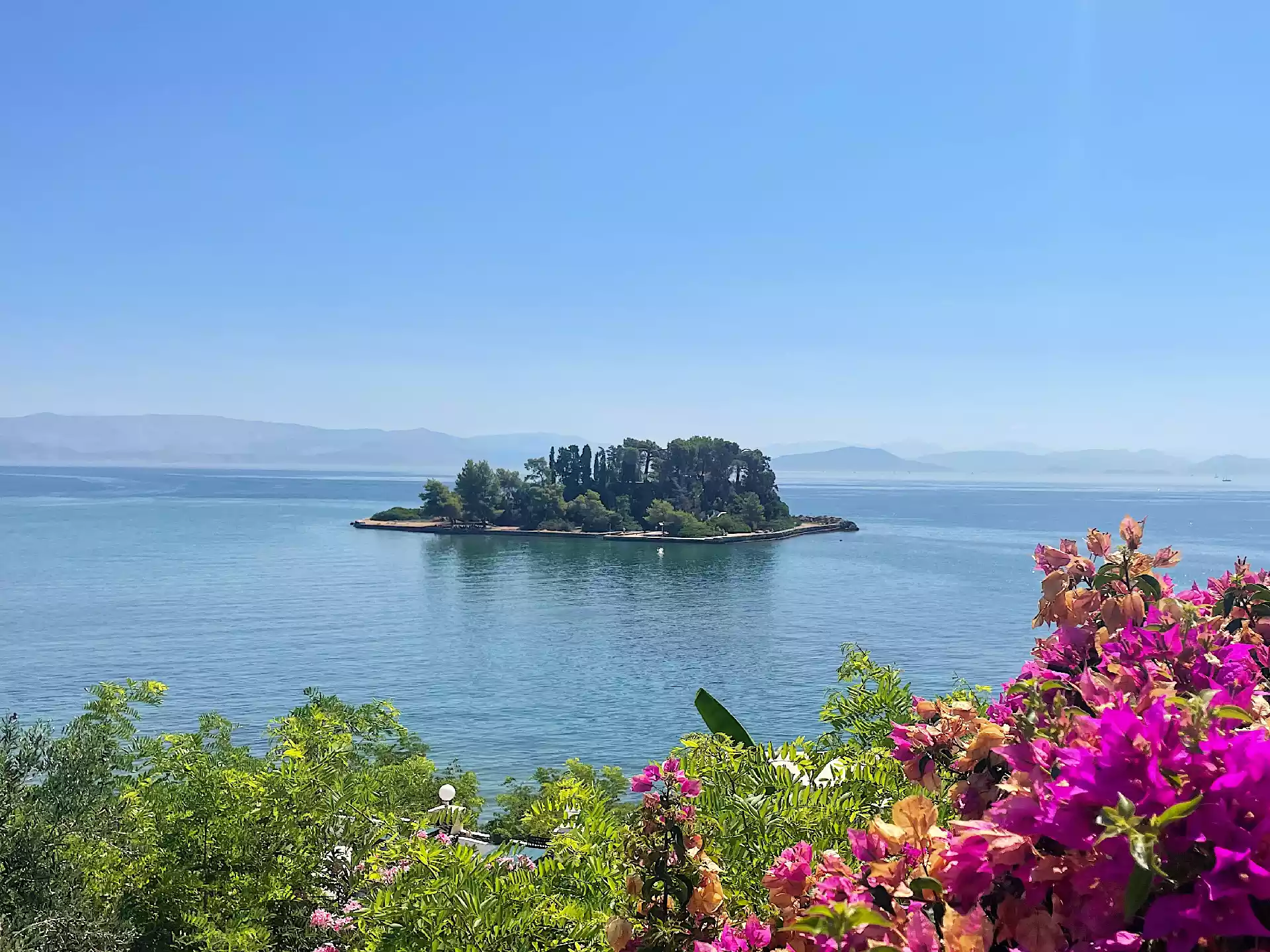
Many people think that Mouse Island received its name because of its shape.
But the truth is… we don’t actually know the real origin of this name.
There are at least four theories about how Pontikonisi got its name.
None of them is supported by enough historical evidence. So, choose the one you like more.
A Really Small Island
The most popular theory says that the island was named after its shape, as its outline resembles a mouse.
Pontiki means mouse, and nisi means island. Literally, Mouse Island.
Another, very similar theory says that the island is so small that it was compared to a little mouse.
Although the name Pontikonisi has been known for centuries, historians still cannot say with certainty how it originated.
No surviving historical source explains exactly when or why the island was called “Mouse Island.”
One thing we cannot argue with – it really is very small. Covering approximately one hectare (10,000 m²), Pontikonisi is one of the smallest islets around Corfu.
Despite its size, Pontikonisi has become one of Corfu’s most famous symbols of Corfu and most recognisable islets in Greece.
The Odysseus Legend
According to local Greek mythology, Pontikonisi is connected with the adventures of Odysseus.
One of the most famous local legends says that Pontikonisi is the legendary ship of Odysseus.
In Homer’s Odyssey, after the Phaeacians safely brought Odysseus home to Ithaca, Poseidon became furious that they had helped him.
To punish them, he turned their ship into stone.
But Homer never says that the ship became Mouse Island.
So you’d better not tell that to someone who has actually read the Odyssey.
The idea that the petrified ship is today’s Pontikonisi is purely a local Corfiot legend that developed many centuries later.
The Pontic Monks Theory
A less popular theory suggests that the name Mouse Island has nothing to do with a mouse at all.
According to this version, the island was once associated with monks from Pontus, on the southern coast of the Black Sea.
Some researchers suggest that the name Pontikonisi may have originated from these Pontic monks rather than from the Greek word for “mouse.”
However, like the other theories, there is no historical evidence to support this explanation.
The Monastery
Mouse Island is home to the unique little Church of the Pantokrator (Transfiguration of Christ), dating from the 11th or 12th century, during the Byzantine period.
Today, the island has no permanent residents, but in the past, monks stayed here to care for the Byzantine church.
Every year, on 6 August, the church celebrates the Feast of the Transfiguration, one of its most important religious celebrations.
On this day, locals and visitors travel to the island by boat to attend the special service.
Apart from that, the church is usually closed to visitors, except during religious services and special feast days.
In Literature
Pontikonisi also appears in Gerald Durrell’s beloved memoir My Family and Other Animals, one of the most famous books ever written about Corfu.
In one of the chapters, Gerald writes about how he and his sister Margo swam across to the island.
It was one of their regular summer activities, and each time the resident monk scolded them for disturbing the peace around the church.
This story offers a glimpse of Pontikonisi in the 1930s, when monks still stayed on the island to care for the Byzantine church.
Today, Mouse Island has no permanent residents, but My Family and Other Animals preserves a small yet unforgettable glimpse into its more recent history.
Wildlife
Pontikonisi lies within the protected Halikiopoulou Lagoon, one of Corfu’s most important natural habitats.
The lagoon is part of the Natura 2000 network, a European initiative that protects areas of exceptional ecological importance.
Despite its small size, the island is covered with dense Mediterranean vegetation, including tall cypress trees, creating a natural shelter for wildlife.
Throughout the year, resident species such as little egrets, grey herons, cormorants and gulls use the island for roosting and nesting.
During the spring and autumn migration seasons, bee-eaters, European rollers, hoopoes, common terns and many other migratory birds stop here to rest and feed before continuing their journeys across the Mediterranean.
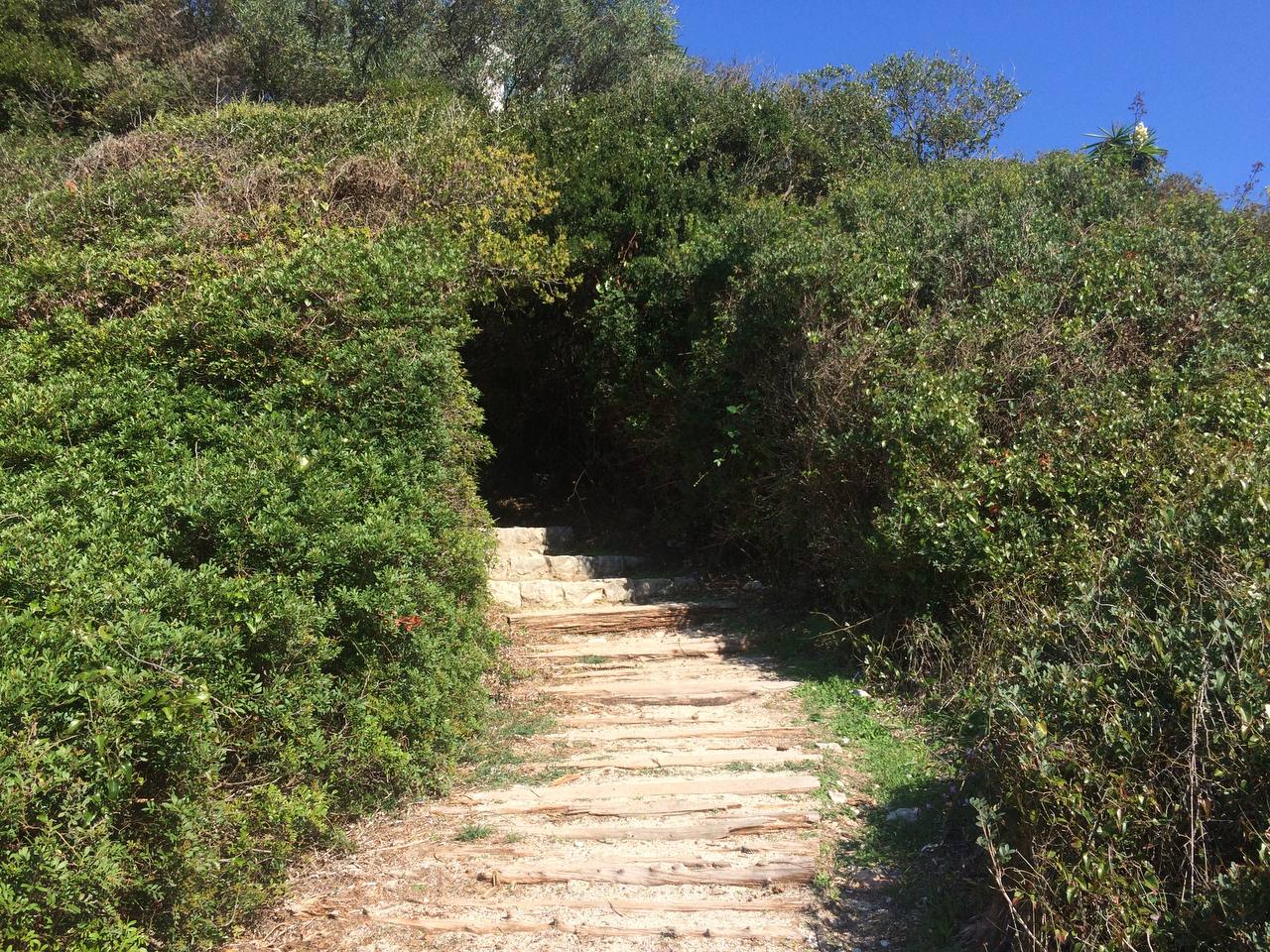
Because of its small size and dense vegetation, there are no walking trails or attractions to explore beyond the church itself.
At the same time, this helps preserve the islet’s peaceful character while protecting its wildlife.
Is It Possible to Visit Pontikonisi?
Yes, you can visit Pontikonisi.
Located about 300 metres from Vlacherna Monastery, the island is accessible by small boats, which run to the islet approximately every 20 minutes during the tourist season.
The crossing takes about 1.5 minutes, and a return ticket costs around €2.
A Symbol of Corfu
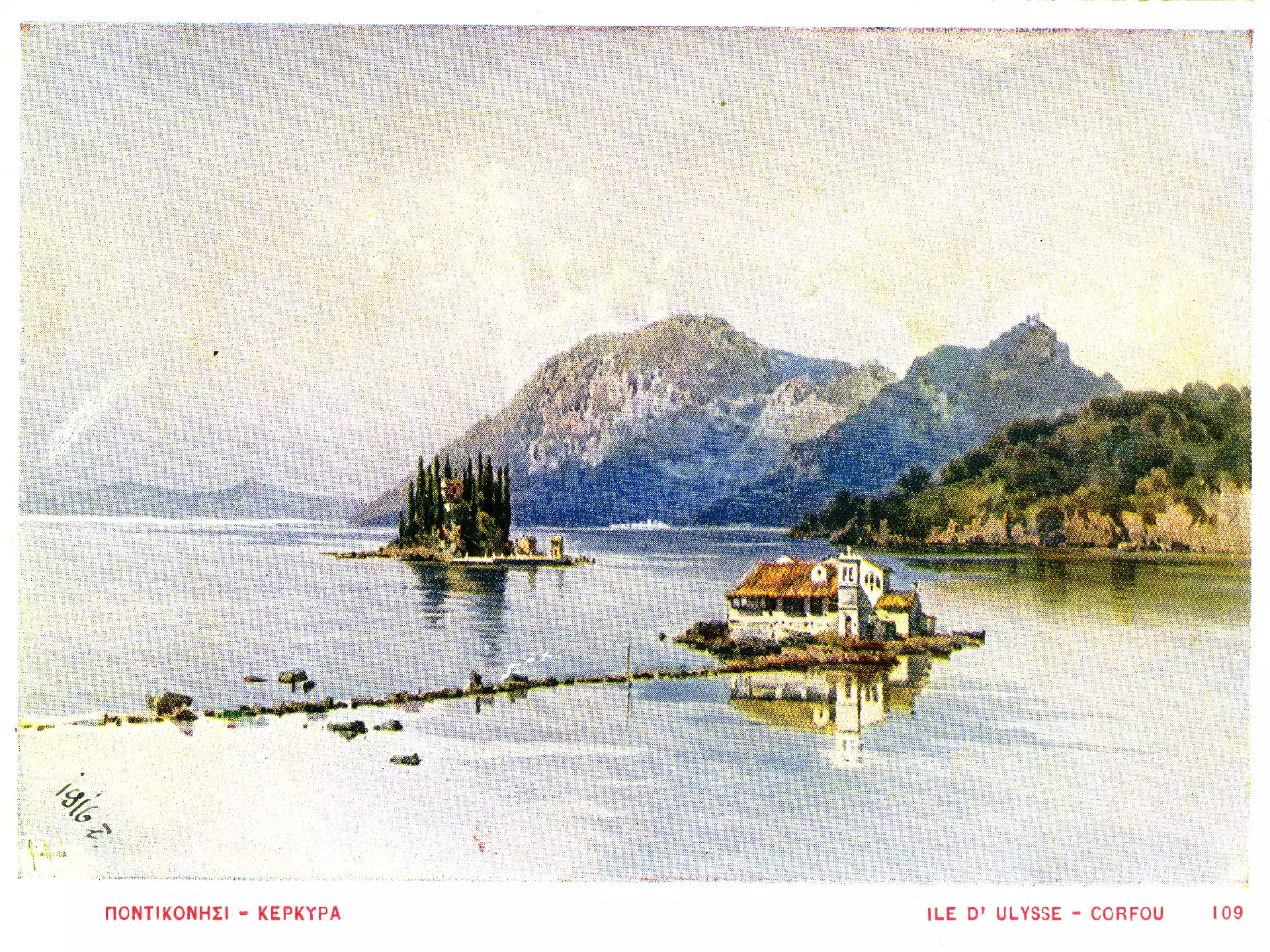
For more than a century, Mouse Island has been one of Corfu’s most photographed landmarks.
It has appeared on countless vintage postcards, travel posters, paintings, guidebooks and tourism campaigns, becoming one of the island’s most recognizable symbols long before the age of social media.
The iconic view of Vlacherna Monastery with Pontikonisi in the background has travelled all over the world on postcards and souvenir photographs, helping to make this small island one of Greece’s most recognizable landscapes.
In recent decades, Pontikonisi has also become famous among aviation enthusiasts.
The island appears in thousands of spectacular plane-spotting photographs taken from Kanoni, where aircraft pass low over the lagoon just before landing at Corfu International Airport.
Today, for many people around the world, an image of Pontikonisi is the very first that comes to mind when they think of Corfu.